Blog

The Problem with Averages in Understanding Guns, Violence, and Crime: No One Lives in “The United States”

The problem with averages is that there is no “United States of America” when it comes to guns, violence, and crime, but many Americas. Some of these Americas – like my neighborhood in Winston-Salem – are more like our first world counterparts in the OECD, and some of them are more like the third world politically, economically, and socially.

Back in January, a video called “Number One with a Bullet” by someone named Bill Whittle – apparently a conservative blogger — got a lot of attention on the various internet gun sites I survey. People loved it. As of today, it has over 700,000 views on YouTube, and thumbs up are nearly 7,000 to just over 300 thumbs down.

In addition to these cheers, the video also drew jeers, notably in a response by the consistently anti-gun founder of “Armed with Reason,” Evan DeFillipis, on the ever faithful(ly anti-gun) Huffington Post (“Better Than Somalia – How to Feel Good About Gun Violence”).

[youtube https://www.youtube.com/watch?v=pELwCqz2JfE?version=3&rel=1&fs=1&showsearch=0&showinfo=1&iv_load_policy=1&wmode=transparent]

I watched the video, saw some good and some bad in it, and moved on. Or at least I thought I had. But I couldn’t stop thinking about it, especially about how Whittle and DeFillipis basically talked past each other and so, as happens most of the time in these gun debates, no mutual understanding is gained.

For my part, I think Whittle is completely unhelpful on one point, and extremely insightful on another; DeFillipis is the mirror image, being very helpful on one point, and completely blind on another.

Round 1: The U.S. and Per Capita Homicide Rates Inter-Nationally

Whittle spends the first three minutes or so of the six minute video showing the ranking of the countries of the world according to per capita homicide rates. #1 Honduras, #2 Venezuela, etc. Whittle smugly notes that the United States is not even in the Top 5 or the Top 10, 20, 30, etc. The United States with 4.7 murders per 100,000 population in 2012 ranks #111 in the world, just behind Yemen and Niger and just ahead of Latvia and Micronesia.

Here, Whittle’s data is not incorrect, but his interpretation is questionable. Do I care that the United States’ per capita homicide rate is better than Venezuela’s or Mozambique’s or Turkmenistan’s? Or, as DeFillipis correctly observes, better than Somalia’s? Absolutely not. I care how the United States compares to comparable nations – advanced, (post-)industrial, democratic nations. DeFillipis looks at Organisation for Economic Co-operation and Development (OECD) member nations ranked as high-income by the World Bank (those with a gross national income > $12,616). Among these 31 countries, the United States has the highest per capita homicide rate. That is significant.

Not even knowing what the other 30 high income OECD nations are, I could just watch the list as Whittle scrolled through the countries and know that his argument was ridiculous. Not a single country I think is comparable to the United States politically (democratic) and economically (rich) ranks higher than the U.S. No country I would want the U.S. to emulate ranks higher. That is significant and here Whittle’s rhetoric is simply unconvincing.

My judgement: DeFillipis 1, Whittle 0.

Round 2: The U.S. and Per Capita Homicide Rates Intra-Nationally

In the second half of the video, Whittle looks more in depth at per capita homicide rates in different U.S. cities. Here he is onto something extremely important in terms of the problem with averages. Aggregating data for the entire United States helps us see some things, but blinds us from other things. Most importantly as concerns exposure to homicidal violence, no one lives in “the United States,” per se. We live in 50 different states (and the District of Columbia). But we don’t just live in one of 50 states, we live in one of over 3,000 particular counties or county-equivalents. But we don’t just live in one of 3,000+ counties, we live in one of thousands of cities, towns, municipalities, unincorporated areas, and so on. My risk of being a victim of homicide in my home town of Winston-Salem, is different from my risk in the next city over, Greensboro, or the state’s capital, Raleigh.

Unequal Distribution of Homicide in NC CitiesWhittle recognizes this, and begins by observing the homicide rate in Detroit (54.6 per 100,000) is almost 12 times the average for the United States. Were Detroit ranks alongside the world’s countries, it would rank #2, just behind Honduras and just ahead of Venezuela. Whittle lists other extremely violent cities like New Orleans, St. Louis, Baltimore, Newark, Oakland, etc. – all of which inflate the average murder rate for the United States.

By contrast, there are cities which have extremely low homicide rates, like Henderson (Nevada) at 1.5 per 100,000, Lincoln (Nebraska) at 1.1, and Plano (Texas) at 0.4. Whittle observes that if the entire country had Plano’s homicide rate, the United States would rank #211 out of 218 countries, including a number of those OECD nations we ought to be comparing ourselves to like France, Italy, Denmark, Spain, and Germany.

Moreover, even city-wide averages can obscure the realities of relative risk. We don’t even live in particular cities, but in particular neighborhoods. I don’t have data on the geographic distribution of homicides in Winston-Salem, but the following graphic shows the geographic concentration of assaults in particular neighborhoods in my home town. The ring shows my neighborhood.

Unequal Risk of Assault in Winston Salem GraphicWhittle mentions Chicago, and as I have written previously, Chicago is very instructive. Chicago is the 13th most murderous city in the United States with 18.5 homicides per 100,000 inhabitants, 4 times the national average. But as Andrew Papachristos has shown in his research there are vastly different rates of homicide and gunshot injury according to where one lives in Chicago.

Papachristos takes these distinctions even further, because even in a high-crime neighborhood in Chicago not every person is equally exposed to homicide risk. In a study of gun homicides in one high-crime neighborhood in Chicago (82,000 people living in a 6-mile area), Papachristos and his co-author Christopher Wildeman found that “41% of all gun homicides occurred in a network component consisting of approximately 4% of the population of the community.”

Papachristos, Anthony Braga, and David Hureau have also studied the risk of gunshot injury in Boston’s Cape Verdean community. Again, the risk of gunshot injury is highly concentrated in certain social networks. 85% of gunshot victims are found in the network, as depicted in the graphic below.

Papachristos: Co-Offending network of high-risk individuals in a Boston community, 2008. Red nodes represent the victims of fatal or non-fatal gunshot injuries, and these are clustered within the network. http://yins.yale.edu/illustrative-projects/social-networks-help-explain-gun-violenceAn implication of Papachristos’s research accords with Whittle’s ultimate conclusion: “Maybe it’s not the guns. Maybe it’s the people holding the guns.” Maybe more guns in the hands of the wrong people leads to more crime, and more guns in the hands of the right people leads to less crime? I wrote previously about a promising study I saw presented at the American Society of Criminology which looked at homicide in New Orleans. The authors set out to move the guns and crime debate forward by distinguishing between the effect of legal and illegal guns on homicide. They hypothesized that presence of legal and illegal guns affect homicide rates, but in different ways. Legal guns reduce gun homicide rates (supporting Lott’s more guns, less crime argument), while illegal guns increase gun homicide rates (supporting Cook’s more guns, more crime argument).

The problem with averages is that there is no “United States of America” when it comes to guns, violence, and crime, but many Americas. Some of these Americas – like my neighborhood in Winston-Salem – are more like our first world counterparts in the OECD, and some of them are more like the third world politically, economically, and socially. DeFillipis unintentionally recognizes this in making another point using a U.S. State Department travel warning for Guatemala: “Violent crime is a serious concern due to endemic poverty, an abundance of weapons, a legacy of societal violence, and weak law enforcement and judicial systems.” This could very well be issued as a travel warning to U.S. citizens traveling to certain parts of certain cities here.

DeFillipis is largely silent on distinctions like this, and dismisses any talk of racial disparities in homicidal violence and violence due to gang involvement.

Hence my judgement for round 2: DeFillipis 0, Whittle 1.

Conclusion: A Lose-Lose for Understanding

In the end, it’s a tie: DeFillipis 1, Whittle 1. But rather than seeing it as a “win-win,” I see this as yet another “lose-lose.” No dialogue, no understanding, not even any attempt at understanding. But of course, I already knew that.
New Course for Fall 2015: The Sociology of Guns

I am excited to be teaching a new course in the fall semester, related to my new research project on American gun culture: Sociology 384: Special Topics Seminar – The Sociology of Guns. Course description follows the flier.

Sociology of Guns Course Annoucment 3-12-15COURSE DESCRIPTION

Guns often have a spectacular presence in the American imagination, from George Zimmerman to Sandy Hook Elementary to the American sniper Chris Kyle. But guns are also a part of everyday life in communities across the United States. They are used as tools of criminal violence and self-defense, and are one of the mostly commonly owned pieces of sporting equipment in the country.

Clearly, guns are an important part of American society and culture. With more than 300,000,000 guns held by private citizens and a Constitutional amendment associated with gun ownership, the possession, regulation, meaning, and use of firearms reaches into important realms of American society, including: civil rights and liberties, identity and culture, crime and violence, public health and personal safety, and even sport and leisure.

This course explores the multifaceted role guns play in the U.S. from a sociological perspective. From a firm foundation of understanding the history and technology of firearms, as well as the historical and constitutional origins of the 2nd Amendment, the course will focus on a range of topics, including: the prevalence and distribution of guns; attitudes and opinions about gun ownership; lawful possession and use of firearms; illegal and legal gun markets; gun crime and injuries; and the varieties of responses to gun injuries and crime.

William Butler Yeats on the Experience of Modernity

I have always invoked Marshall Berman invoking Karl Marx invoking Shakespeare (Prospero in “The Temptest”) to describe the experience of modernity:

“All that is solid melts into air, all that is holy is profaned.”

All That is SolidBut I could equally well use Irish poet William Butler Yeats from “The Second Coming” (1919) via African novelist Chinua Achebe:

Things fall apart, the centre cannot hold;

Mere anarchy is loosed upon the world…


ThingsFallApart

William Butler Yeats (1865-1939) by Charles Beresford Public domain via Wikimedia Commons


On the Ideal of Ethical Neutrality in Research on America’s Culture Wars

I am not sure what it says about me, but in my career as a sociologist, I have been drawn to some of the more controversial issues of my time. What James Davison Hunter way back in 1991 called “culture wars.” Culture wars, according to Hunter, are “struggles to define America,” and have been fought in recent years over the family, education, media and the arts, law, and politics.

Hunter Culture WarsMy earliest work looked at one aspect of the culture wars over education: the struggle to incorporate multiculturalism into the curriculum. I then examined the intersection of religion and politics – two topics to be avoided in polite conversation and potentially explosive when considered together. And now I am studying one of the most controversial and divisive issues of all: guns.

Because my topics are part of ongoing culture wars in America, it is common for people to want to situate me on one side of the battle or the other. From multiculturalism, to religion and politics, to guns, I find myself repeatedly coming back to the question of objectivity in research.

I recognize that there is no perfect standpoint of objectivity (“Punctum Archimedis”). As philosopher Leszek Kolakowski once observed, “there is no well so deep that leaning over it one does not discover at bottom one’s own face.” But this does not mean that everything is completely relative and the quest of objectivity should be abandoned.

In the appendix to my first book, I wrote at some length about the ideal of ethical neutrality in research. Re-reading that appendix, I realized that I could with some minor editing, say the same thing about my research on guns as I did about my research on multiculturalism. So what follows is my adaptation of the words I originally wrote back in the late 1990s.

Student Movements for MulticulturalismThe battle over guns in American society is a culture war. The two sides in this battle not only have different positions on guns, they have different views of what American is fundamentally. Much of the discourse over guns, therefore, is shaped by the ideological positions people bring to the debate. Given this reality, in my study of Gun Culture 2.0, am I not simply substituting one ideologically-based analysis for another?

This is a very significant question, and one which I need to address immediately and directly. There is absolutely a difference between my social scientific analysis of Gun Culture 2.0 and the advocacy research of groups like the Violence Policy Center, the applied research of public health scholars like Arthur Kellerman, the journalistic muckraking of Dana Loesch or Tom Diaz, and the like.

The difference is in my aspiration to and the methodical pursuit of “value freedom” or “ethical neutrality” in scholarship. Of course, a full consideration of the question of whether social science is, can be, or should be “value free” is beyond the scope of this work. Whether dealing with important issues of epistemology or ontology, the philosophy of science or sociology of knowledge, such a treatment would fill a volume in itself. I can only briefly offer my own position on the question, one I derive from my engagement with the great German social scientist, Max Weber, and his famous essay on “value freedom” (Wertfreiheit, sometimes rendered as “ethical neutrality”) in the social sciences. [Source: Weber, “The Meaning of ‘Ethical Neutrality’ in Sociology and Economics” (1917), pp. 1-47 in Max Weber, The Methodology of the Social Sciences, Edward Shils and Henry Finch, eds. (New York: Free Press, 1949.]

Weber Methodology Book CoverAlthough Weber’s specific concern was with the “sciences of culture” (Kulturwissenschaften), his principles seem to me applicable to all the social sciences which aspire to be empirical sciences of concrete reality, or what Weber called “sciences of actuality” (Wirklichkeitswissenschaften). [Source: Weber, “‘Objectivity’ in Social Science and Social Policy” (1904), in The Methodology of the Social Sciences, p. 72.]

Weber argues for a particular relationship between “facts” on the one hand and “values” on the other. He holds that although “the problems of the social sciences are selected by the value-relevance of the phenomena treated,” these problems “are, of course, to be solved ‘non-evaluatively.’” Social scientists, therefore, should heed “the intrinsically simple demand that the investigator and teacher should keep unconditionally separate the establishment of empirical facts . . . and his own practical evaluations, i.e., his evaluation of these facts as satisfactory or unsatisfactory. . . . These two things are logically different and to deal with them as though they were the same represents a confusion of entirely heterogeneous problems.” [Source: Weber, “The Meaning of ‘Ethical Neutrality,’” pp. 21, 11.]

Thus, while the values and interests social scientists hold necessarily affect the questions we pose, the phenomena we choose to study, and our modes of investigation, these values and interests should not affect our application of widely-accepted protocols for the collection, analysis, and presentation of evidence.

To be sure, these protocols and their enforcement through peer review of work prior to publication are imperfect. Ideologies, we know from Marx, Freud, and other “hermeneuticists of suspicion,” often operate unconsciously or subconsciously, and so the ability of methodology to bracket motivations may be limited. [See: Irving Louis Horowitz, “Social Science Objectivity and Value Neutrality: Historical Problems and Projections,” in Professing Sociology: Studies in the Life Cycle of Social Science (Chicago: Aldine Publishing, 1968), p. 40.]

Hence, ethical neutrality is an ideal we pursue; even Weber himself was not able to attain it. That we pursue neutrality nevertheless is, in my view, a characteristic which most distinguishes social scientific research from journalistic speculation and advocacy. The Violence Policy Center’s “research” on concealed carry killers, for example, would never see the light of day in a peer-reviewed academic journal.

This is not to say that social scientists should never make normative claims, be involved in the public sphere, or seek to influence public policy. Social science, as my teacher at UC-Berkeley Robert Bellah often said, can be a form of “moral inquiry” and “public philosophy.” [See especially the position outlined in the Appendix to Robert Bellah, Richard Madsen, William Sullivan, Ann Swidler, and Steven Tipton, Habits of the Heart: Individualism and Commitment in American Life (Berkeley: University of California Press, 1985), a book which itself exemplifies social science as public philosophy.]

But, Weber implores us, in moving from “judgments of fact” to “judgments of value” we must try to be “absolutely explicit” about our movements and intentions (as Bellah is in his work). [Source: Weber, “The Meaning of ‘Ethical Neutrality,’” p. 10.]

Reinhard Bendix (1916-1991)

Another UC-Berkeley sociology professor, Reinhard Bendix, provides a useful summary of the position I am outlining when he writes, “Social research is characterized by an interplay between identification and detachment, of subjectivity and objectivity.” [Force, Fate, and Freedom: On Historical Sociology (Berkeley: University of California Press, 1984), p. 28.]

In my case, my identification with the issue of guns came not until my 43rd year of life, when a combination of circumstances led me to learn to shoot a handgun under the guidance of my future wife and a trainer for the state police. From there I had the opportunity to do more fun shooting: plinking with .22 handguns, trap and sporting clays with shotguns, and destroying plastic bottles with a .50 cal rifle. I also came to identify with armed self-defense after a very dangerous encounter with a drug addict and criminal in the parking lot of my apartment complex.

Thus, before I even began studying Gun Culture 2.0, I had already formulated certain answers to questions such as, “What are guns for?” and “Why do people need X/Y/Z gun?” and “Why carry a gun?” I necessarily approach empirical questions about guns with these pre-scientific intuitions and ideas in mind. It is this “value-relevance” which shapes my choice of phenomena to study. But in seeking to understand Gun Culture 2.0, I turn not to speculation or advocacy but to my disciplinary training as a professional sociologist which stresses the aspiration to detachment and objectivity in the analysis of empirical data.

I believed when I began this work a couple of years ago, and I continue to believe, that my distinctive contribution to the question of guns in American society is to examine the issue empirically using established methods of social scientific inquiry. My aspiration in this work was best summarized for me by the late Reinhard Bendix, a Weberian sociologist who I had the good fortune to meet at Berkeley not long before his death in 1991. Bendix referred me to a quote from the philosopher Baruch Spinoza which I will always remember as embodying the social scientific ideal to which I still aspire: “I have sedulously endeavored not to laugh at human actions, not to lament them, nor to detest them, but to understand them” (Tractatus Politicus, i, 4).

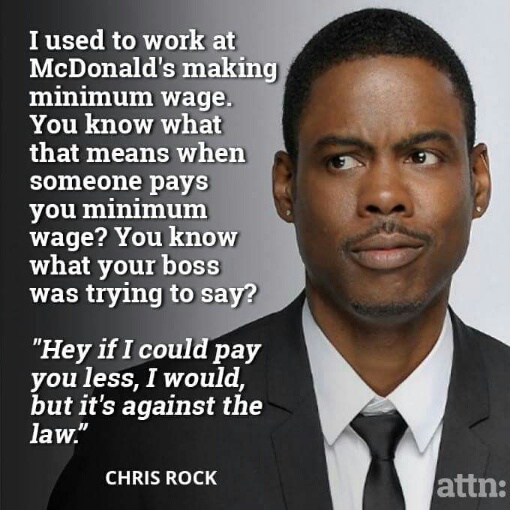
Chris Rock’s Neo-Marxist View of Minimum Wage

facebook_1423479685331_resizedIn my classical theory class we just finished reading excerpts from three of Karl Marx’s most (in)famous works: the Paris Manuscripts, Capital, and the Communist Manifesto.

Marx confidently predicted that the contradictions inherent in the capitalist system would lead to its downfall, as economic crises would get progressively worse over time, making clear to workers their real conditions and leading them to revolt against their oppressors.

For Marx, because the state always acted in the narrow interests of the capitalist class, workers would not see the state as looking out for their interests. One thing Marx did not foresee, however, is various more aggressive interventions by the government to keep economic crises from happening and to mitigate their negative effects when they do. Or the entire system of social provision in which the state redistributes by law resources from the capitalist class to the working class. A.k.a., the social welfare state.

Whether this just amounts to the state having the long-term interests of the capitalist class in mind — saving the capitalist class from its own short-sightedness — is a question for another time. But I thought of this issue when the graphic above appeared on my Facebook timeline.

Like Chris Rock, Marx held that it was in the interest of the capitalist class to keep wages as low as possible, since wages paid are negatively related to profits. But the state intervened to mandate a legal minimum wage, to the short-term detriment but the long term profit of business.

Gun Rights versus Gun Control: On the Need to Understand Sampling Error in Reporting Statistics

Based on a recent survey by the Pew Research Center, we can be 95% confident that the actual gap in American’s attitudes toward protecting gun rights versus controlling gun ownership is as small as 0% and as large as 12%.

Depending on where you stand on the issue, things might not be as bad as was reported (no gap between gun rights and gun control!) or they could be much better than what was reported (12% more favor gun rights than gun control!).

These important caveats got lost amid all of the controversy over this Pew Research Center survey question about American’s attitudes toward protecting the right of Americans to own guns versus controlling gun ownership. (I wrote about this controversy here and here.)

Pew Research reported that in 2014, the scales tipped in favor of protecting gun rights (52% of respondents) over controlling gun ownership (46% of respondents). That result, as well as the trend in responses over the past 20 years, is displayed graphically below.

Pew Research Center Graph on Rights vs Control

Gun rights supporters rejoiced and gun control proponents lamented – the latter even going so far as to petition Pew Research to change the wording of this question. But as Peter Berger said, “the first wisdom of sociology is this—things are not always what they seem.”

We are bombarded so constantly with statistics like these that we often forget (or for some, do not know in the first place) that the results of surveys based on samples are estimates (sample statistics) of the true underlying values in the population being observed (population parameters). Ideally, a sample statistic will match the population parameter, but in the real world that is basically impossible 100% of the time.

Having some idea of how big the gap is between a sample statistic and population parameter is vital to interpreting results like those reported by Pew Research. Unfortunately, in this particular graphic, what is not reported is the survey’s margin of (sampling) error.

However, if you go to the section of the Pew Research site that gives further information about the survey,  you will see that for the total sample size of 1,507 respondents, the margin of error is +/-2.9% — basically 3%.

So, looking at the responses above, what we really know is that the proportion of the population in favor of protecting gun rights could be as high as 55% and as low as 49%, and the proportion favoring controlling gun ownership could be as high as 49% and as low as 43%. (Assuming no other biases or errors in measurement or methodology – about which more in another post.)

So, the actual gap in American’s attitudes on this question ranges from 0% to 12%. Things could be either not as bad as gun control/safety advocates think OR much worse! And things could be either worse than gun rights proponents think OR much better!

Moreover, we are only 95% confident that the sample statistic is +/-3% of the actual population parameter. That means there is a 5% chance that the statistic is off from the actual underlying population parameter by more than 3%. In other words, in 95 out of 100 samples of the same size that are drawn, the survey estimate will be +/-3% of the population parameter. 5 times out of 100, it will deviate more than that.

All is not lost, however. There are more advanced statistical methods we can use to determine the likelihood that a difference we see in survey statistics is “real.” But to just say X% of people believe this and Y% of people believe that based on a survey is very imprecise indeed.

The Pew Research Question “about the survey” section also concludes, “In addition to sampling error, one should bear in mind that question wording and practical difficulties in conducting surveys can introduce error or bias into the findings of opinion polls.” I will take up this issue in a future post.

ADDITIONAL NOTE ON THE SAMPLING DISTRIBUTION OF THE MEAN AND THE CENTRAL LIMIT THEOREM:

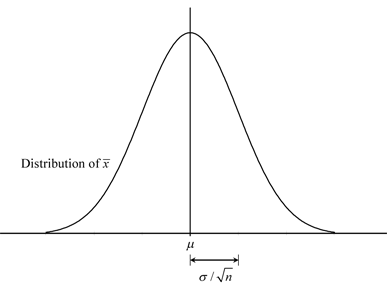
Sampling error is based on the central limit theory (nice overview from the Khan Academy), which holds that the sampling distribution of any statistic will be normal or close to normal if the sample size is sufficiently large – even if the values in the population are not normally distributed. A normal distribution is sometimes called a “bell curve.” This is fairly well represented in the following graphic from the Web Center for Social Research Methods:

Source: http://www.socialresearchmethods.net/kb/sampstat.php


Robert N. Bellah (1927-2013)

This is not an obituary or remembrance of Robert Bellah. I don’t have the emotional energy to spare for that, even though it has been over a year since he passed. There are many such tributes, though, some collected on the website maintained in his name.

This is simply the text of an entry I wrote on Bellah in 1997 for the Encyclopedia of Religion and Society, which I recently found posted online at the website of the Hartford Institute for Religion Research. It says alot about what an amazing thinker he was, and what an inheritance (and challenge) he left behind.

Copyright (c) 2008 by Andreas and Philip Guther. Licensed under CC BY-SA 4.0, via Wikimedia Commons

Bellah, Robert N.

(1927-) Elliott Professor of Sociology at the University of California, Berkeley, where he has been on the faculty since 1967, chairing the Center for Japanese and Korean Studies from 1968 to 1974 and the Department of Sociology from 1979 to 1985.

One of the most distinguished sociologists of the post-World War II era, a “public intellectual” seeking to address a wide audience, Bellah is conversant with sociologists, anthropologists, and political scientists as well as ethicists and philosophers, theologians, and the general public. (Significantly, although he is widely known, Bellah has not held a major office in any professional association.) At Harvard, where he earned a joint Ph.D. in sociology and Far Eastern languages in 1955, Bellah was a student of Talcott Parsons. Although Parsons’s influence on Bellah’s thinking is evident, during his career Bellah has worked within several theoretical traditions.

Although his later work increasingly manifests a Weberian ambivalence toward rationalization, his early work exemplifies the “modernization theory” of the 1950s and is clearly and self-consciously structural-functionalist. A Durkheimian concern for shared symbols and the obligations they articulate runs through many of his writings. Bellah’s more recent work also has been informed by the critical functionalism of Habermas, especially the idea that economic and political “systems”—wherein the primary media of communication are money and power, respectively— invade and “colonize” the “life-world”—in which the medium of communication is linguistic and ideally oriented toward mutual understanding.

Religious Evolution

Bellah’s dissertation, published as Tokugawa Religion: The Cultural Roots of Modern Japan (Free Press 1957, second edition 1985), provides a Weber-like analysis of Japanese development, explaining the role of premodern cultural values in modernization. Against a Parsonian theoretical background, Bellah identifies the indigenous equivalent of the Protestant ethic in the motivational ethic of inner-worldly asceticism fostered by certain religious movements in the Tokugawa period (1542-1868). This early work and Bellah’s later contributions to the study of religion can be characterized as variations on a theme most clearly articulated in his essay “Religious Evolution” (1964), which he developed in a course on social evolution cotaught with Parsons and S. N. Eisenstadt at Harvard.

Bellah begins by defining religion as “a set of symbolic forms and acts that relate man to the ultimate conditions of his existence.” He argues that beginning with the single cosmos of the undifferentiated primitive religious worldview in which life is a “one possibility thing,” evolution in the religious sphere is toward the increasing differentiation and complexity of symbol systems. His evolutionary religious taxonomy specifies five stages: primitive (e.g., Australian Aborigines), archaic (e.g., Native American), historic (e.g., ancient Judaism, Confucianism, Buddhism, Islam, early Palestinian Christianity), early modern (e.g., Protestant Christianity), and modern (religious individualism). In the modern stage of religious evolution, the hierarchic dualistic religious symbol system that emerged in the historic epoch is collapsed and the symbol system that results is “infinitely multiplex.” In this posttraditional situation, the individual confronts life as an “infinite possibility thing,” and is “capable, within limits, of continual self-transformation and capable, again within limits, of remaking the world, including the very symbolic forms with which he deals with it, even the forms that state the unalterable conditions of his own existence.”

This argument foresaw the reflexive individualism that characterizes both the intellectual culture of post-modernism and the “new religious consciousness” of the 1960s and 1970s. With Charles Glock, Bellah undertook a project in the early 1970s to investigate the latter, the results of which were published as The New Religious Consciousness (University of California Press 1976). In his concluding remarks, Bellah foreshadows the argument of Habits of the Heart: Individualism and Commitment in American Life —written with Richard Madsen, William M. Sullivan, Ann Swidler, and Steven M. Tipton (University of California Press 1985 [second edition 1995], hereafter Habits )—in arguing that the deepest cause of the 1960s counterculture was “the inability of utilitarian individualism to provide a meaningful pattern of personal and social existence.” The crisis of the 1960s therefore was “above all a religious crisis.” As a response to the sterility of the utilitarian worldview, the counterculture turned to the American tradition of expressive individualism in the form of a spirituality grounded in the primacy of individual experience and the belief in nonduality, exemplified by the appropriation of Zen Buddhist practices. Again foreshadowing the argument in Habits , Bellah highlights the danger that expressive individualism may come to articulate with utilitarian individualism, to which it was originally a response. When expressive individualist-inspired religious symbols and practices “become mere techniques for ‘self-realization,’ then once again we see utilitarian individualism reborn from its own ashes.”

Thus, by the 1970s, Bellah’s positive embrace of the “wide-open chaos of the post-Protestant, postmodern era” in Beyond Belief: Essays on Religion in a Post-Traditional World (Harper 1970) had grown more cautious as the full consequences of the “modern” religious epoch became more evident. By the 1980s, the relationship is clearly strained. Understanding that the treatment of religion in Habits is an elaboration of the fifth “modern” stage of religious evolution makes clear that the “infinite possibility thing” he lauds in “Religious Evolution” has become the hyperprivatized “Sheilaism” (“my own religion”) he laments in Habits . Particularly troubling about the personalized and privatized modern religion examined in Habits is that it is underwritten by what Alasdair MacIntyre in After Virtue (1981) calls an “emotivist” view of ethics that reduces the foundation of moral claims to the subjective feelings of individuals and renders the development of common moral understandings difficult if not impossible.

Civil Religion

Bellah’s strong position that “any coherent and viable society rests on a common set of moral understandings” is a Durkheimian thread that runs throughout his work and draws attention back to his work in the 1960s. While his guiding theoretical framework is encapsulated in the “Religious Evolution” paper, Bellah is best known for his landmark “Civil Religion in America” (1967), an essay that, according to Bellah, he has “never been allowed to forget” and that “in important respects changed” his life. Alongside church religion and distinct from it, Bellah argued, is an elaborate and well-organized civil religion . It is actually a religious “dimension” of society, characteristic of the American republic since its founding. It is not Judeo-Christianity but grows out of the American historical experience, which is heavily influenced by Protestantism. Civil religion is “an understanding of the American experience in the light of ultimate and universal reality” and can be found in presidential inaugural addresses from Washington to Kennedy, sacred texts (the Declaration of Independence) and places (Gettysburg), and community rituals (Memorial Day parades). It is especially evident in times of trial for the nation such as the Revolution and Civil War.

In Varieties of Civil Religion (coedited with Phillip Hammond, Harper 1980), Bellah ties this argument to the religious evolution framework, arguing that every society has a “religio-political” problem, and that in premodern phases the solution consists either in a fusion of the two realms (archaic) or in a differentiation but not separation (historic and early modern). Civil religion proper comes into existence only in modern society, where church and state are separated as well as differentiated. A civil religion that is differentiated from both church and state is possible only in a modern society.

Although Bellah concludes his 1967 essay by declaring American civil religion to be “still very much alive,” he also warns that the nation is facing a third time of trial centered on “the problem of responsible action in a revolutionary world.” Decrying U.S. involvement in Vietnam, Bellah claimed America to be “at the edge of a chasm the depth of which no man knows.” Just as his hope in “Religious Evolution” became more cautious in Habits , so too does his concern at the conclusion of “Civil Religion” turn somewhat despairing in his American Sociological Association Sorokin Award-winning book, The Broken Covenant: American Civil Religion in Time of Trial (Seabury 1975 [second edition, University of Chicago Press 1992]) in which he famously declares American civil religion to be “an empty and broken shell.” Written at the time of Watergate and the continuation of the Vietnam War, there was little to temper Bellah’s pessimism in the mid-1970s. By the 1980s, however, some hope began to emerge once again.

Although he never uses the term civil religion in Habits , the “biblical and republican traditions” championed in Habits are a new and more dynamic conceptual response to the same substantive issues. A public focus on commitment to the common good as opposed to the excesses of utilitarian and expressive individualism is possible, for Bellah, if the once-dominant cultural language of the biblical and republican traditions—relegated in contemporary America to the status of “second languages”—are reappropriated by citizens actively pursuing the good society in common. The obstacles to forging a national community based on common moral understandings are considerable—they are institutional as well as cultural, as Bellah states in The Good Society (Knopf 1991)—but as any Durkheimian would argue, surmounting them is essential.

Symbolic Realism

As should be evident, Bellah has always been a cultural sociologist, taking seriously the causal efficacy of values, the centrality of meaning, and the sui generis reality of symbols. His famous definition of religion in “Religious Evolution” is unmistakably cultural. This perspective on religion is also evident in his major methodological statement on behalf of a nonreductionist perspective in the social scientific study of religion, the perspective of “symbolic realism.”

In the essay “Between Religion and Social Science,” Bellah criticizes the “Enlightenment myth of secularization . . . the view that there is only a mechanical relation between science and religion, namely, the more of one the less of the other.” He argues that the theories of Marx, Freud, Durkheim, and Weber contribute to this myth because of their reductionist view of religion. Even when they correctly see the symbolic (nonrational, noncognitive) dimensions of human life and hence religion (Freud’s unconscious, Durkheim’s collective effervescence, and Weber’s charisma), they end up explaining religious symbols away as expressing some other more fundamental “reality.” Bellah, in contrast, advocates a position he calls symbolic realism in which religious symbols are seen to express a nonreducible reality, a reality sui generis. While not denying that rationalistic and reductionistic approaches have something to tell us about religion, he refuses to allow them to be the only voices.

Social Science as Moral Inquiry

That the social sciences regardless of their empirical focus must have a moral voice is a point Bellah has made in various essays, but nowhere more clearly than in the Appendix to Habits , “Social Science as Public Philosophy.” Against those who would place social science firmly on the former side of the allegedly unbridgeable divide between “is” and “ought,” Bellah argues for a reappropriation of the larger, synoptic view of a social science that is at once philosophical, historical, and sociological. Such an approach would embrace the ethical aims of social inquiry: holding a mirror up to society, being a form of social self-understanding, discerning the good society from actually existing societies, or, as any good Durkheimian would say, distilling the ideal from the real. A social science that ignores its ethical meaning not only fails to live up to its highest calling but also can more easily be put in service of manipulative ends by those with political and economic power. For Bellah, then, the social sciences must always be moral sciences.

In conclusion, it must be said that the meaning of Robert Bellah’s work cannot be fully understood without recognizing that he is a man of faith (see 1991). At Harvard, he came under the influence of the Lutheran theologian Paul Tillich during the period when Bellah was “reappropriating” his Presbyterian religious upbringing on his own terms. Indeed, there are as many references to Tillich in Beyond Belief as to Durkheim and Parsons. The question Tillich posed in The Theology of Culture (1959) is the one with which Bellah seems to be wrestling: “How can the radicalism of prophetic criticism which is implied in the principles of genuine Protestantism be united with the classical tradition of dogma, sacred law, sacraments, hierarchy, cult, as preserved in the Catholic churches?” As Bellah himself has said, “Discipleship and citizenship and the relation between them have been my enduring preoccupations.”

—David Yamane

References

R. Bellah, “Religious Evolution,” American Sociological Review 29(1964):358-374

R. Bellah, “Civil Religion in America,” Daedalus 96(1967):1-21

R. Bellah, “Between Religion and Social Science,” in Beyond Belief (New York: Harper, 1970): 237-259

R. Bellah, “Comment,” Sociological Analysis 50(1989):147

R. Bellah, “Finding the Church,” in How My Mind Has Changed , ed. J. Wall and D. Heim (Grand Rapids, Mich.: Eerdmans, 1991): 113-122

A. MacIntyre, After Virtue (Notre Dame, Ind.: University of Notre Dame Press, 1981)

P. Tillich, The Theology of Culture (London: Oxford University Press, 1959)

I Am a Professor

There, I said it. I am a professor. The description does not exactly roll off my tongue. I am a professor. It somehow sounds pompous to me. So I generally avoid saying it.

T-shirt suggested for me on my Facebook feed

When I am traveling and a cab driver asks me what I do for a living, or at holiday parties when I am making small talk with people I have just met, I usually say “I teach at Wake Forest.” Which is true enough, as far as it goes. But it doesn’t go very far.

I spend 40% or less of my work time teaching (in and out of class), preparing to teach, or grading. In fact, the 300-375 minutes/week I spend in classrooms (30 weeks a year, not counting summer teaching) is one of the smallest parts of my job.

I spend another 10-20% of my time in department, college, university, and professional service activities (committee work, doing peer reviews).

So the majority of my time I spend reading, researching, and writing for publication. And this, I think, is what most distinguishes being a “professor” from being a “teacher.”

But I don’t think many people get the distinction. Even though a large and growing percentage of the American population today has graduated from college, the majority of college graduates have little contact with professors outside of class. So all they know about the job is that professors teach.

Posted in a dorm common area at Western Carolina University

And at many colleges and universities, there is no expectation that faculty will do anything other than teaching (and doing institutional service work). In these cases, saying one is a “teacher” is perfectly descriptive of the job, even if the formal job title is “professor.” (This also applies to institutions where faculty are suppose to do more than teach, but do not.)

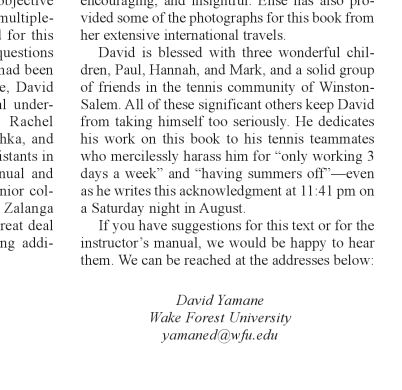
Still, I get frustrated sometimes when people say “must be nice to have summers off” or “must be nice to work only 3 days a week.” Depending on my mood, this is true even when I know they are joking, as with the guys I play tennis with. I came across the dedication below (for my sociology of religion textbook) recently because I have been working on the revisions for the new edition of the book over this winter “break.” It expresses my frustration.

My acknowledgements for the 5th edition of my religion textbook with Keith Roberts

In fact, I have been working on the textbook revisions for 10-12 hours a day 6 days a week from the moment I turned in my fall grades. And I will be working on it until the moment I step into class for the spring semester. So when people ask me how my winter break is going, I want to channel John McEnroe and scream, “You cannot be serious!” Or at least to say, “Must be nice to have some time off for the holidays. I wouldn’t know.”

But when I settle down and upon reflection I realize that I am part of the problem. I perpetuate it by continuing to say “I teach at Wake Forest” rather than saying “I am a professor” when people ask me what I do for a living.

It still doesn’t roll easily off my tongue, but at least it better reflects who I actually am and what I actually do. I am a professor, dammit.

Concluding note: My lovely wife, who is an occupational health nurse working in manufacturing facilities, will read this post and think, “Quit complaining. You don’t have a real job. The people I work with have real jobs.” To her I say: I would not trade my job for any other. I love my job. It is a great job. But it is a job. A more than full-time job, where you work six days a week, not three, and where you don’t have summers or winters off. That is all. Now I have to get back to my textbook revisions.

Live Tweeting PBS Frontline Episode “Gunned Down: The Power of the NRA”

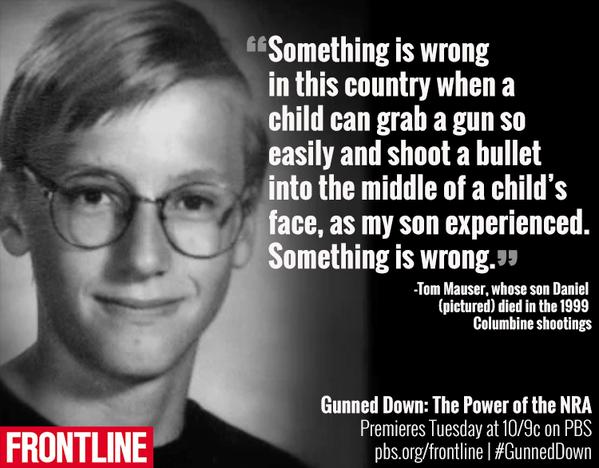
Thanks to a recommendation from my fellow sociologist of guns, Jennifer Carlson, I was asked by the digital content manager for PBS’s FRONTLINE to participate in live Tweeting before, during, and after the premier of their upcoming episode, “Gunned Down: The Power of the NRA.”

The episode airs at 10:00am Eastern Time on Tuesday, January 6th. I will be Tweeting from @gunculture2pt0 and PBS will be tweeting from @frontlinepbs — using the hashtag #GunnedDown.

Frontline Gunned DownHere is a brief description of the episode by PBS: “How the NRA became a powerful lobbying force. Included: remarks from individuals on both sides of the gun-control debate, including former NRA spokesman John Aquilino; Vice President Joe Biden; and former NRA executive vice president Warren Cassidy.”

A five minute YouTube preview video is also available:

I was also asked to suggest to PBS Frontline some individuals who might live Tweet the episode from a more pro-gun perspective. I will be interested to see who they may have asked and who may have said yes.

Of course, anyone can Tweet the event using the hashtag #GunnedDown, so I will look forward to “seeing” old and new virtual friends/colleagues Tuesday night.


Putting Grading and Grades in Perspective

The quickening of life due to technology is a blessing I depend on daily. But it is also a curse at times, especially at the end of the semester when it comes to grades. I submitted my fall grades today at 11:45am (they were due at noon!). By 4pm the first grade complaint had arrived in my email. No more waiting a week for the printed report card to show up in the mail or having weeks before the start of the next semester for the student to cool off before being in touch!

Exceptional RatingI never worry about “getting in trouble” for the grades I give. My syllabus is usually a dozen pages long, reading like the legal document that it has become, spelling everything out in meticulous detail. I also use grading rubrics handed out in advance so students know the grading criteria for individual assignments.

I don’t even get frustrated by the grade complaints. What I mostly get is sad. I feel badly that they are under so much pressure to get certain grades, whether the pressure if from their parents or themselves.

I feel especially badly for students who invest so much of their sense of self in their grades that they see an “A-” and they do not experience happiness. They only see what is not there.

Or, worse, they have a sense that if they do their best, that it must be worth an “A.” They do not understand a world in which THEIR best does not equal THE best.

Case in point, a very good student I had in class this semester saw an “A-” only for what was not there, rather than what was there. S/he wrote to me:

I’ve never had a professor say that an A is a 95 or above which is why I’m concerned about this because I worked incredibly hard in this class and feel like I deserve an A and to any other professor I have ever had at wake a 94 would be an A.

So if you could provide me with clarity on why you choose to grade this way and why it isn’t standardized across classes that would be helpful because I am concerned about this.

My response:

I am happy to clarify, though I doubt given your state of mind about this that this is going to make you feel any better. But hopefully I can give you both some information and some perspective (my view at least) on the grading in general and your grade in particular.

The syllabus, which I reviewed at length at the beginning of class, specified the following grades according to points earned:

“The scale for grades based on the number of points earned over the course of the semester is as follows:
A         96‑100
A‑        92‑95
B+        89‑91
B          86‑88
B‑         82‑85
C+       79‑81
C         76‑78
C‑        72‑75
D+       69-71
D         66-68
F          Less than 65”

So, in fact, 96 and above is an A in this course (and all of my courses).

The bulletin of Wake Forest College (p. 33) specifies only that A represents exceptionally high achievement, A-, B+, and B represent superior achievement, B-, C+, and C represent satisfactory achievement, C-, D+, D, and D- represent passing but unsatisfactory performance, and F is failure. There are no instructions nor is there any standardization in grading within or between departments beyond these broad frameworks.

So, although you may have never had a professor say that a 95 (or a 96) represents an “A”, it is certainly the case that professors grade very differently. In some cases most students get A’s and in other cases few students do. In some classes (accounting, biology, math) many students fail, and in some (com, soc, religion) none do. So, grading varies enormously from class to class, such that what a 94 means in one class — and what it take to earn a 94 — is not the same in another class.

I am very sorry that you do not feel that being at the high end of “superior” is adequate. I wish that you would look at an A- and think, “Awesome, I performed at a superior level.”

I am also sorry that you feel if you work incredibly hard that you “deserve” an A. It is absolutely possible for people — myself included — to work incredibly hard an not attain “exceptionally high achievement,” a grade that is reserved — in my class, at least — for truly exceptional (rare, unprecedented, extraordinary, remarkable, phenomenal — some synonyms) work. Your work was at the high end of superior, and in the case of your class participation, it was exceptional — hence your getting 100% of that component.

You have probably already figured this out, but for the record let me put this in some perspective for you. If you take 120 credits to graduate from Wake Forest, you will have the opportunity to earn 480 grade points. For this 3 credit course, the difference between an A (4.00) and an A- (3.667) is 0.999 grade points (p. 33 of bulletin). Or, in the context of your college career, 0.2% of your total grade points.

As I said at the outset, I am sure that nothing short of “ooops, I made a mistake, you get an A” will put a smile on your face and give you a sense of satisfaction in a job well done. But that is my hope for you.