Blog

Reason Requires That You Accept You May Be Wrong

Wake Forest University’s Commencement ceremony was particularly special this year because my oldest son graduated (with a B.S. in Finance, Summa Cum Laude, if I may brag on him just a bit). It is always exciting to be present to the symbolic transition of students from their pasts into their futures. All the more so when that student is your kid and you have a front row seat and can snap a quick selfie.
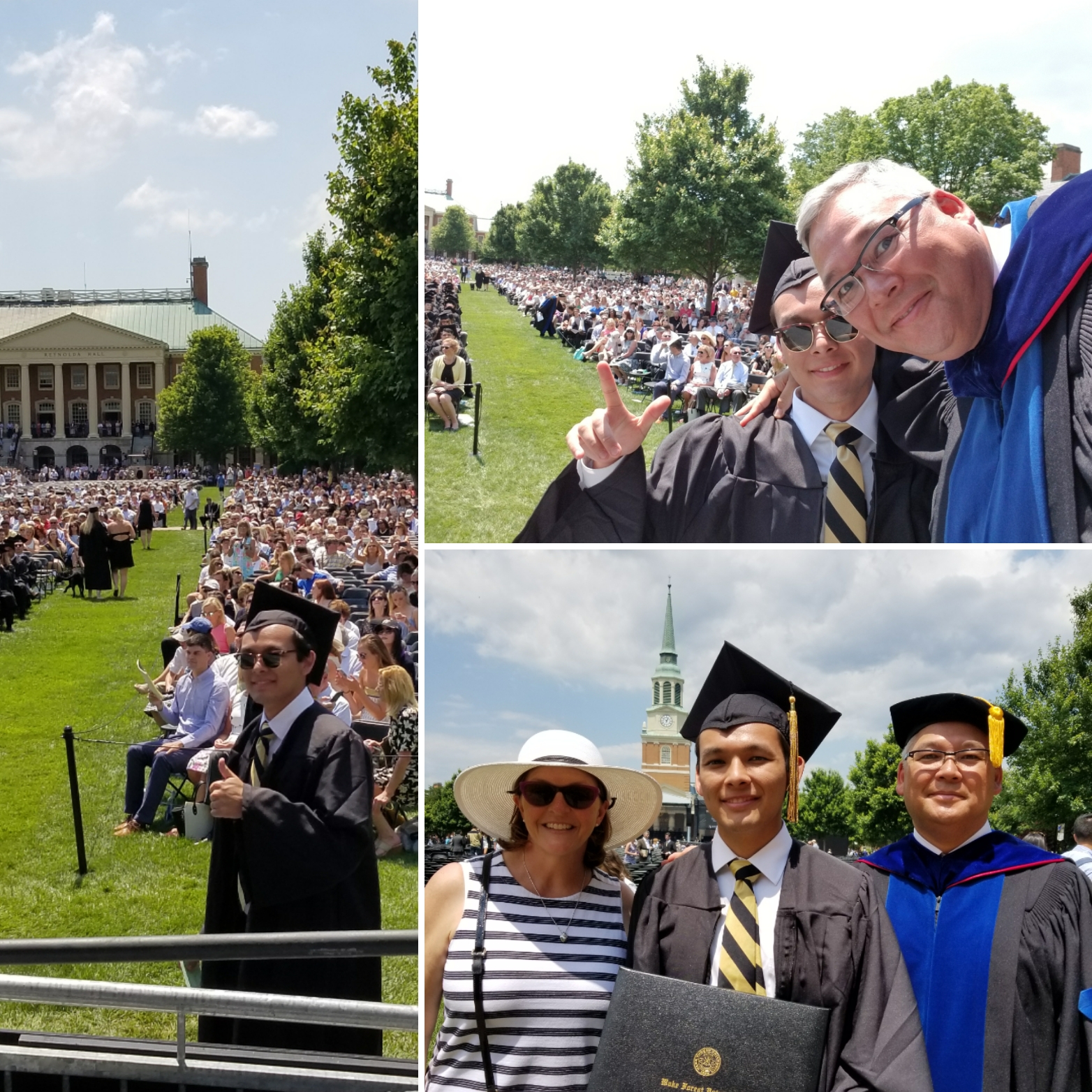
This year’s commencement speaker was Jon Meacham, a Pulitzer Prize-winning presidential historian (books on Jefferson, Jackson, FDR, and George H.W. Bush). In the era of celebrity commencement speakers — e.g., Stephen Colbert at Wake Forest in 2015, Will Ferrell at USC this year — choosing a scholar to give your commencement address can inspire reactions from yawns to disappointment (among students, especially).

Of course, choosing someone as your commencement speaker because they are smart instead of well-known or wealthy has the benefit of producing smarter commencement addresses. To wit: In my time as a faculty member, David Brooks gave one of the smarter commencement addresses I’ve seen.

Monday, May 21, 2007. Wake Forest professor David Yamane hoods David Brooks with an honorary Doctor of Humane Letters degree.

I thought Jon Meacham’s commencement address this year was smart, too. In particular he talked about partisanship, reason, reflection, truth, and error in a way I found compelling. I’ve bolded the sections I found most significant in the extended excerpt below:

The great fact of America today is pervasive partisanship. Too many of us are given to reflexively reacting to whatever unfolds in the public square – not according to our reason but to our ideological and even tribal predispositions. Now I want to be very clear about this. Partisanship is not an intrinsically bad thing. The middle way is not always the right way. It’s in the nature of things and in the nature of human beings to hold fast to views and allegiances, to heroes and to creeds, to the exclusion of other views and other allegiances, other heroes and other creeds. Such is politics, which is both an emotional and a rational undertaking. What is worth avoiding, however – and too many of us are doing too little to avoid this – is reflexive, as opposed to reflective partisanship.

The point of America is not for all of us to agree. That is impossible and undesirable in any event. Autocracies are about total agreement. Or at least total submission. The American republic is founded on the notion that even the person with whom I most stridently disagree may have something to say worth hearing and heeding and that the only way I can figure out whether that’s the case is by listening to that person and by weighing the relative merits of what is said and then –only then – making up my mind.

The danger – and this is all too pervasive at the moment – lies in my reflexively dismissing a point made by a person simply because that person is the one making the point. That’s a foreclosure of reason. I’d argue that’s a sin because the human capacity for judgment – however flawed, however fallen – is the great gift that distinguishes us above the beasts of the field and the trees of the forest and the creatures of the sea. So I beg you, truly: Be reflective about our public life. Make up your mind based on facts, not alternative facts or alternative evidence.

Be open to the very real possibility that you might be wrong from time to time and people you thought were beyond redemption might be right.

I’ve learned alot about myself and others by hanging out with people whose social and political views are different from mine, so Meacham’s comments definitely resonated with me. Try it. You may not like it, but it is good for you.

My view of Jon Meacham’s commencement address at Wake Forest University, May 2017

Trying to Put My Writing on a Diet

Like many academics, I write alot. Books, book chapters, articles, book reviews, lectures and lesson plans, manuscript reviews, letters of recommendation, my blogs (this one less than my Gun Culture 2.0 blog), emails, and more.

Like some academics, I enjoy writing. Although I enjoy writing, it is hard. Or perhaps, I enjoy writing because it is hard. The most rewarding things in life aren’t easy.

As legendary writing teacher William Zinsser puts it, “A clear sentence is no accident. Very few sentences come out right the first time, or even the third time. Remember this in moments of despair. If you find that writing is hard, it’s because it is hard.”

Unlike most academics, I sometimes actually think of myself as a writer. That is, I try to think of myself not as someone who is just reporting research findings, but someone who is trying to present ideas in an clear, interesting, and compelling way.

To that end, I try to read and think about not just the substance of what I am saying but the writing itself. Zinsser’s On Writing Well  is a book I return to often.

Among his advice is to write what you think you want to say, then cut it in half (or something like that). There are so many wasted words in writing, some due to poor mechanics, some due to poor thinking.

Here’s an example I came across recently in my work on concealed carry laws:

BEFORE: What permits are called can sometimes be meaningful.

AFTER: Permit names are sometimes meaningful.

In this case, I am clear about what I want to say but I just say it poorly. Poor mechanics. My work is replete with such problems.

My writing accountability partner recently recommended Helen Sword’s Stylish Academic Writing  to me.

In the “Things to Try” section of her chapter on “Smart Sentencing,” Sword recommends a free diagnostic tool available on a web site she has created called The Writer’s Diet. You cut and paste a section of your writing into the tool and it tells you how “flabby or fit” your writing is.

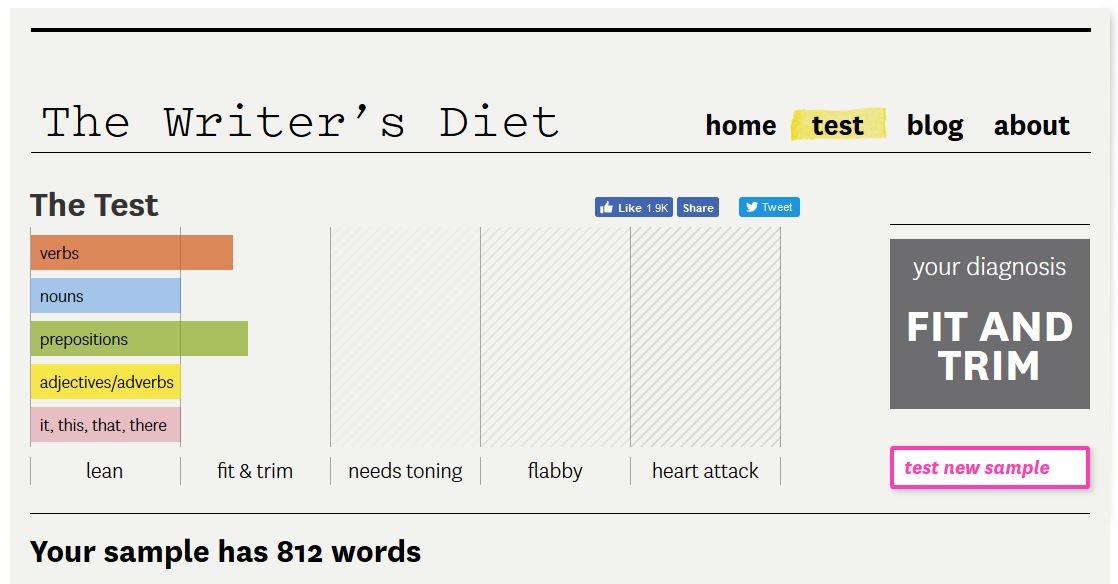
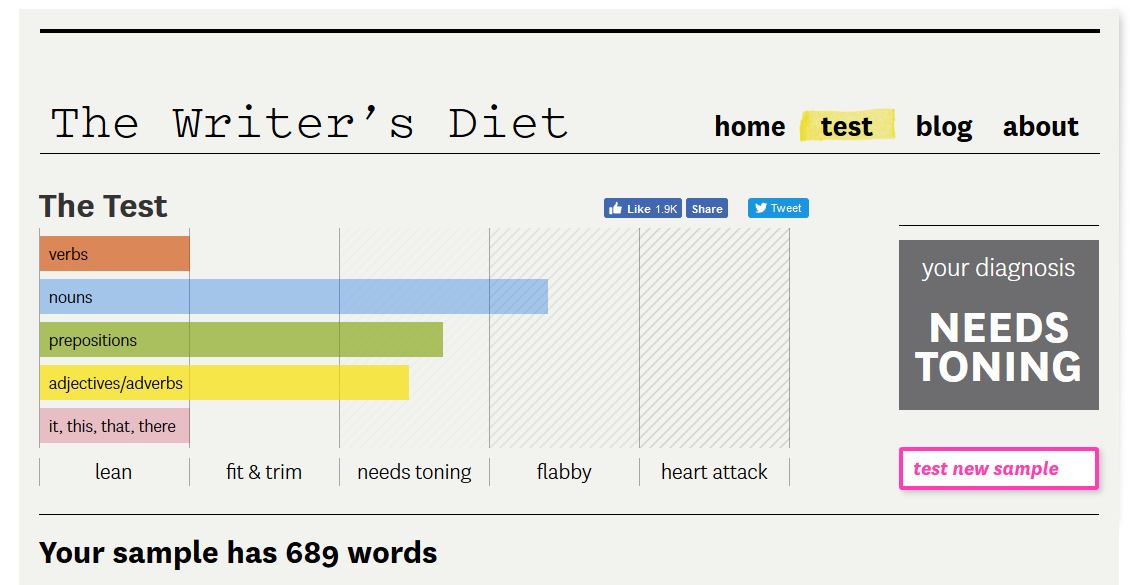
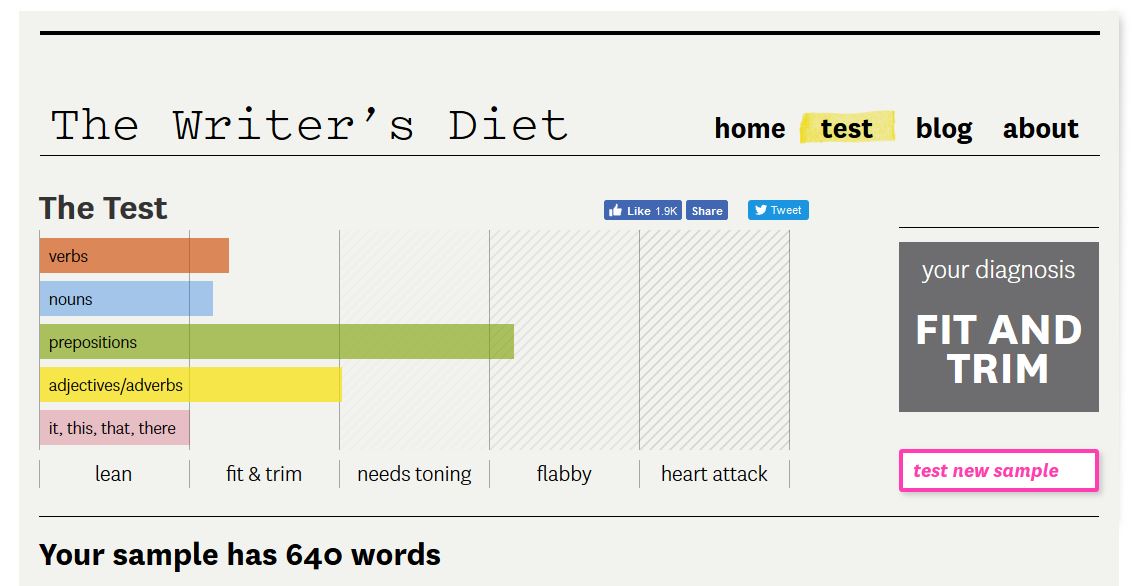
I put some of the sections of the introduction to my book on Gun Culture 2.0 through the test and here is what I found.

The catchy story that begins the chapter: FIT AND TRIM!!!!


The analytical framework, mid-section of the chapter: NEEDS TONING!


The descriptive final section of the chapter: FIT AND TRIM!!!!! But needs some work with the prepositions.

This is not to say that I am a good writer, but it is a reflection of the fact that I take writing seriously and try to put in the work to make my writing better. It is an ongoing process.

Sociological Key Words: Guns, Gun Culture

The American Sociological Review was founded in 1936 as the official publication of the American Sociological Society. (The ASS was founded in 1906, and was apparently unaware of acronyms until 1959 when it changed its name to the American Sociological Association.)

The ASR remains the flagship journal of the ASA, and is one of the top 2 US journals in the field (the other being the American Journal of Sociology). It is a difficult journal to publish in because peer reviewers and editors set a very high bar for acceptable quality.

Recently I was asked to review an article submitted in my former area of expertise, the sociology of religion. I responded that I did not want to review the submission because I am not longer working principally in the sociology of religion, but I would be happy to review any submissions received on the topic of guns or gun culture.

An editorial assistant kindly responded to tell me that the key word “religion” was removed from my reviewer profile so I would no longer be sent manuscripts on that topic, but no key word existed in their database for “firearms,” “guns” or “gun culture” so they could not be added to my profile.

This is telling and reflective of the reality of what is published about guns and gun culture in sociology.  To find an article in the ASR about guns that isn’t primarily about gun violence or crime, you have to go back nearly 30 years to 1988 for an article by Douglas Smith and Craig Uchida called “The Social Organization of Self-Help: A Study of Defensive Weapon Ownership” or 1980 and 1981 for articles by Alan Lizotte and David Bordua on “Firearms Ownership for Sport and Protection.”

Without the modifier “violence,” guns are simply not a key word in sociology.

Religion and Guns Research Digested in Academic Minute

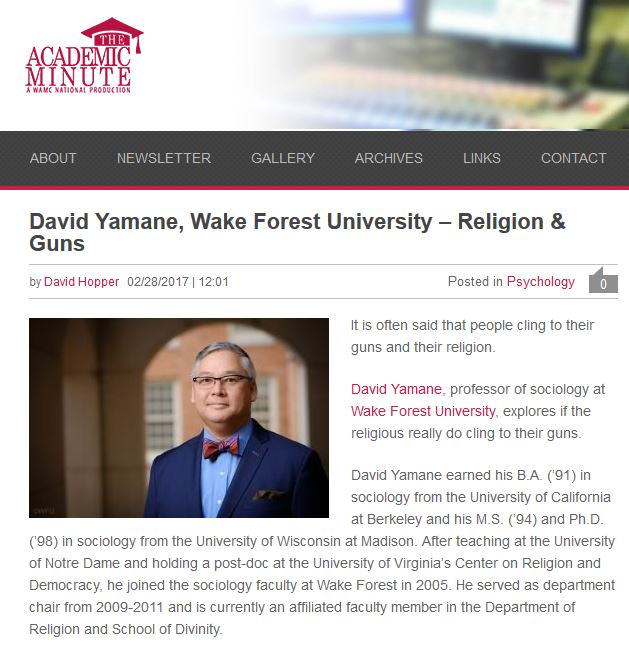
For those of you who would rather listen to me explain my recent article on religion and guns in America than read it, you can do so thanks to WAMC Public Radio’s Academic Minute program, which is also available on the Inside Higher Education website.

academic-minute

Or if you are a real glutton for statistical punishment, go ahead and read the full paper (yamane-2017-journal_for_the_scientific_study_of_religion).

President Donald J. Trump – 10 Initial Gut Reactions and Reflections

I do not follow politics closely anymore, so I am not well-placed to comment on the recent election as anything other than a regular, half-awake citizen. So instead of thoughtful, informed commentary on the political future ahead, I am offering my initial gut reactions and reflections on the election of Donald J. Trump as President of the United States (some of which are basically what I was Tweeting in the wee hours of the morning).

wp-1478703772824.png

  1. It was very interesting to see all of the Hilary bashing on my gun Twitter feed (@gunculture2pt0) and comparatively little pro Trump sentiment. Celebrating someone’s loss rather than someone’s win doesn’t make it feel like much of a win for the country.
  2. Among those who were commenting on Trump’s win rather than Clinton’s loss, I found it funny (odd, not ha-ha) to see people thanking and praising Trump for doing things he hasn’t done yet. E.g., “Thank you for making America great again.” I can see expressions of hope, but Trump is all promises at this point.
  3. Olive branches and unifying language in Trump acceptance speech. He continues to surprise.
  4. When he just reads the teleprompter he sounds presidential. Can he keep it up?
  5. My hope is that “Trump,” the character he plays for the cameras, will become Donald J. Trump, President of the United States now. That is, I hope that the office of the president will mold him into someone who can lead a diverse and complex society in an uncertain world.
  6. My guess is Trump is essentially a pragmatist not an ideologue, and that those who think this is some sort of ideological revolution will be disappointed.
  7. Relating to #6, I just uncovered two books I read as an undergrad back in 1986-1987, both of which highlight the possibility and difficulty of leading political revolutions.

wp-1478702641432.jpg

  1. For all the “drain the swamp” and “reset” rhetoric, almost all incumbents in U.S. Senate and House races were re-elected. (Related: I was shocked by the number of local races on my ballot that were uncontested.)
  2. I find the gloating by Trump supporters this morning excessive, considering that he seems to have lost the popular vote. As Gil Scott Heron once said, mandate my ass.
  3. I hope this means Trump will upgrade his wardrobe from those ugly, ill-fitting (Chinese-made Trump brand?) suits. If those suits are in fact custom tailored, I have just two words for his tailor: “You’re fired!”

donald-trump-suit

Data on Gender Segregation in Occupations (2012)

Teaching Arlie Hochschild’s The Managed Heart in my sociological theory class recently, I was looking for data on the percentage of flight attendants today who are male. I found a nice post on the issue by Mona Chalabi (“Dear Mona”) on the FiveThirtyEight blog. Answer: In 1980, 14.3 percent of flight attendants were male; in 2012, 24.2 percent.

Chalabi also provided this really helpful graphic showing the percentage of U.S. workers who are male in a huge number of job sectors, from least male (kindergarten and earlier school teachers – 2.3%) to most male (boilermakers – 99.8%).

chalabi-datalab-flightattendants-2

My Blogging Year in Review for 2015

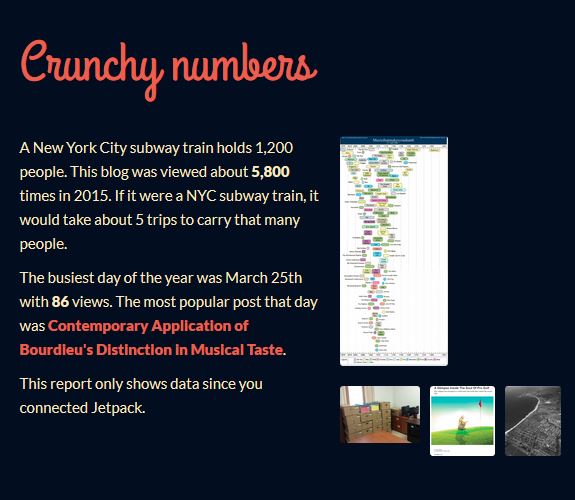
Because most of my blogging these days is at my Gun Culture 2.0 blog, this personal blog gets relatively neglected. So I was surprised that I still had nearly 6,000 visitors to the site in 2015.

2015 Year in Review

My Love of Whisk(e)y and the Alcohol Epidemic in the United States

I love whisk(e)y. My love knows almost no boundaries. American, Canadian, Indian, Irish, Japanese, Scotch, Texas. Barley, corn, rye, wheat. Neat, rocks, mixed.

To fuel my love I have been reading Reid Mitenbuler’s recent book, Bourbon Empire: The Past and Future of America’s Whiskey.

cover-image-bourbon-empireEarly on, Mitenbuler introduces the first alcohol distiller among the British colonists, George Thorpe. Around 1620, Thorpe first distilled alcohol from Indian corn mash in the Berkeley settlement near Jamestown, Virginia. (See another account of this here.)

This wasn’t because without the distilled spirit the colonists would be tee-totalers. Nay. Mitenbuler makes clear that the colonists loaded their ships with beer for their trips across the Atlantic and to sustain them in the colonies.

Alcohol, then as now, was part and parcel of the everyday lives of people living on this continent.

Although I am still in the revolutionary era in the book, I expect that Mitenbuler will discuss the many personal and social ills associated with alcohol use. These, of course, led up to the historic and failed experiment with banning alcohol from 1920 (with the ratification of the 18th Amendment to the U.S. Constitution) to 1933 (with the ratification of the 21st Amendment).

Since the repeal of prohibition, public health scholars continue to document the toll that alcohol takes on individual lives and our society as a whole. According to the Centers for Disease Control, among the short-term health risks of inappropriate alcohol use are:

  • Injuries, such as motor vehicle crashes, falls, drownings, and burns.
  • Violence, including homicide, suicide, sexual assault, and intimate partner violence.
  • Alcohol poisoning, a medical emergency that results from high blood alcohol levels.
  • Risky sexual behaviors, including unprotected sex or sex with multiple partners. These behaviors can result in unintended pregnancy or sexually transmitted diseases, including HIV.
  • Miscarriage and stillbirth or fetal alcohol spectrum disorders (FASDs) among pregnant women.

Long-term health risks include:

  • High blood pressure, heart disease, stroke, liver disease, and digestive problems.
  • Cancer of the breast, mouth, throat, esophagus, liver, and colon.
  • Learning and memory problems, including dementia and poor school performance.
  • Mental health problems, including depression and anxiety.
  • Social problems, including lost productivity, family problems, and unemployment.
  • Alcohol dependence, or alcoholism.

Despite this epidemic of alcohol-related problems in America, any person over 21 years of age can walk into most supermarkets, liquor stores, wine stores, beer stores, bars, or restaurants and buy alcohol. No “prohibited persons,” no permit required, no criminal background check, no mental health assessment, no registration, no additional fee beyond the cost of the product.

To see how easy it is to find alcohol in my quasi-homeland, I asked Google how many liquor stores there are in San Francisco.* Google returned the following map:

liquor stores in san franciscoIt is surprising that given the daily toll taken on individuals and our society as a whole that more people are not up in arms about this alcohol epidemic.

Of course, what could the people possibly do to resist the virtual ownership of the federal government by the alcohol lobby, which according to the Center for Responsive Politics’ opensecrets.org website had 292 lobbyists, $18.9 million in expenditures, and 31 clients in 2015.**

Thankfully, no one holds me — a responsible alcohol user — accountable for the mis-use of alcohol by (many, many thousands of) others. No one looks to me to be part of the solution rather than part of the problem. No one requires me to have a 0.00 blood alcohol content before driving because so many others drink and drive irresponsibly. No one asks me how many more people have to die before I, for the good of my fellow citizens, give up alcohol. (Because if we could prevent even one more death by instituting common sense alcohol laws…)

The problems associated with alcohol in this country also do not prevent me, thanks be to God, from being able to purchase and consume the product.

20151209_215426.jpgI am also extremely fortunate to have very generous friends who share my love of whisk(e)y with me. To wit: Last night my friend offered a bourbon and rye tasting competition between Tennessee-based Prichard’s Distillery and the Buffalo Trace-owned Colonel E.H. Taylor brand.

The clear winner was Prichard’s Double Barreled bourbon, so named because the spirit is aged once at 120 proof in new charred oak barrels (as is required by law to be called a bourbon), then cut to 95 proof and re-aged in new charred oak barrels. The double barreled aging and the relatively moderate alcohol content (in comparison to many craft bourbons today), 90 proof in the bottle, made this an easy-drinking bourbon. And somehow, despite being aged twice in new charred barrels, it was not overly sweet.

The name and label art was also a big winner, in my opinion at least, because I also love a double barreled shotgun.

20151209_215435.jpg*San Francisco, the land of unicorns and rainbows, where the last gun store, High Bridge Arms, was just forced out of business.

**Compared to 55 lobbyists, $8.4M, and 8 clients for the gun rights lobby in 2015.

Post-Paris Reflection: We are PROBABLY Safe, but Not CERTAINLY Safe

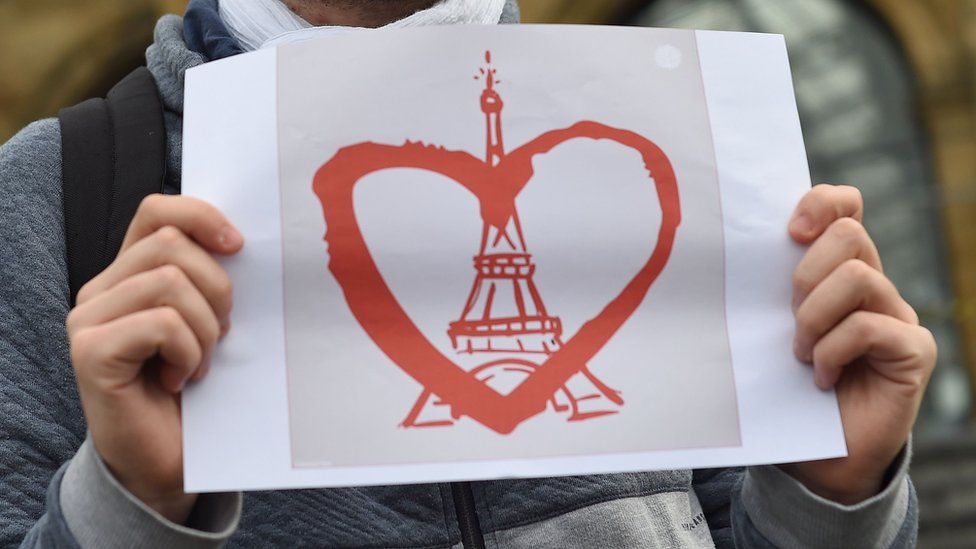
Following the picture below is some text that was originally posted on my Gun Culture 2.0 blog last Saturday. I thought to re-post it here today because I am leaving for Washington, DC in a couple of hours and have been thinking about the advisability of the trip in light of the Paris attacks.

On the one hand, part of me thinks that I am not in any more danger now than before. I am just more realistically aware of the possibility of a terrorist attack than I was a week ago

On the other hand, part of me wonders whether we are entering a new, escalated phase of terrorism, in which case I am in more danger now than before. Especially traveling to a city which has to be higher on terrorists’ hit lists than a mid-sized city in North Carolina.

In any event, I am going and hope to avoid all of the dangers I will face over the next 5 days — probable and improbable alike.

_86686544_afp_heartIt is disgusting but not shocking to hear about terrorist attacks in Paris last night.

This morning I received an email from my university’s office of communications and external relations reassuring our community that university officials “have not heard of any student who has been harmed or is in danger . . . All are safe.” Furthermore, there is no indication that any faculty or staff member “has been harmed or is in danger, either, in France.”

Although it was good to know that no member of our university community had been harmed, I was surprised to read that the university also believed that none were “in danger” and that they “are safe.”

The very fact of the terrorist attack that created the need for the communication suggests that no one in Paris, no one in France, no one anywhere is safe and out of danger.

At the same time, as people ratchet up concern on social media and the 24 hour news cycle kicks into high gear, I remind myself of the work of Steven Pinker showing that we live in the most peaceable time in human history.

So, we are probably safe, but not certainly safe.

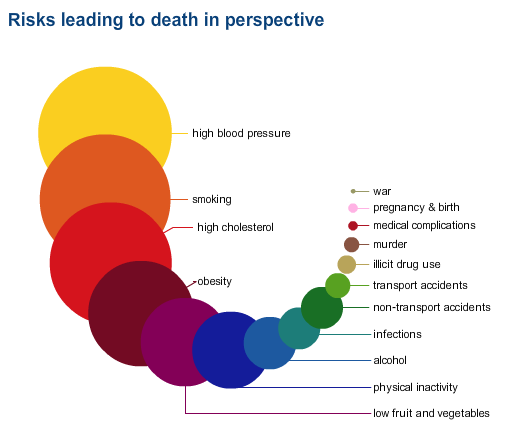
I think about Pinker also as I prepare to travel to Washington, DC for a conference this coming week. Washington, DC seems like it would be a major target for terrorist activity, and yet I try to remind myself that I am more likely to die in a car crash driving to DC than I am to be a victim of a terrorist attack. I’m more likely to die from the saturated fats I will consume while I am there. More likely to die from the work-related stress of preparing for my presentation. More likely to die from the exercise I won’t get because of the conference. Even more likely to die from being attacked in a city with a high rate of violent crime and limited civilian access to the means of lethal force for purposes of self-defense.

risks.0The infographic above is for the UK, but the risk factors for death are very similar in the United States. In the end, I’m afraid that in so many ways we are our own worst enemies.