Blog

Scrutinizing Claims About Guns in Homes as a “Risk Factor” for Homicide in the Home

Getting into the sociology of guns has been both fascinating and frustrating. The fascination comes from deeply immersing myself in something entirely new to me. The frustration comes in attempting to understand the reality of guns in a scholarly – that is, objective and nuanced – manner. In the sociology of guns, the line demarcating science and advocacy is very blurry indeed.

I was thinking about this recently when Moms Demand Action for Gun Sense in America issued a “report” claiming that there had been 74 “school shootings” since the massacre at Sandy Hook. A map of the shootings went viral and President Obama picked up on this figure, giving it considerable political weight. But when gun advocates started to scrutinize the “data,” they found something quite interesting: Moms Demand defined “school shooting” as any shooting that took place on school property. This included events that took place after hours, events that did not involve students, suicides, etc. But clearly when people hear the phrase “school shootings” something else comes to mind. Soon, Pulitzer Prize-winning Tampa Bay Times Politifact declared the claim “mostly false.”

This incident reminded me of some of the other statistics frequently invoked in the debate over guns. Take a simple empirical statement, for example: “people who keep guns in homes are almost 3 times more likely to be murdered.” This seems fairly straightforward and the Brady Campaign to Prevent Gun Violence invokes it on their website as evidence that “legislatures should adopt common sense gun laws that increase the safe and secure storage of firearms in the home.”

But the empirical reality underlying this claim is not as simple as the Brady Campaign suggests. The claim is based on a study by an influential/notorious (depending on where you stand) researcher, Arthur Kellerman and his colleagues: “Gun Ownership as a Risk Factor for Homicide in the Home,” published in the New England Journal of Medicine in 1993. (I have written more about this on my Gun Culture 2.0 blog here and here.)

Kellerman and his colleagues studied Memphis and Shelby County (TN), Seattle and King County (WA), and Cleveland Cuyahoga County (OH). They identified 420 cases (subsequently reduced to 388 cases in the final analysis, of individuals who were firearm homicide victims in private homes between 1987 and 1992. Using a case-control design, they identified a sample of control subjects who were matched to case subjects (those who were killed) by sex, race, age group, and neighborhood of residence.

To determine what differences there were between those who were killed and the control subjects, control subjects and proxies for case subjects were interviewed and asked an identical set of questions to identify risk factors such as gun ownership, drug and alcohol use, previous violence in the home and so on. Proxies for case subjects were identified from police records, newspaper accounts, obituaries, and funeral homes.

Using this information, researchers can estimate how much more likely individuals exposed to a particular risk are to experience the outcome of interest (being killed) than those not exposed to the risk. These estimates are typically expressed in the form of crude/raw odds ratios (from univariate analyses) or adjusted odds ratios (from multivariate analyses). Simply put, “a person exposed to X, is Y times more likely to experience Z,” where X is the risk factor, Z is the outcome of interest, and Y is the odds ratio.

Kellerman’s study, picked up by the Brady Campaign and many other gun control advocates, reported adjusted odds ratios for homicide from multivariate logistic regression as follows:

  • Illicit drug use in household         5.7
  • Home rented                               4.4
  • Previous fight in home                4.4
  • Lived alone                                  3.7
  • Gun(s) kept in home                2.7
  • Previous arrest in household      2.5

Hence, the Brady Campaign’s claim that “people who keep guns in homes are almost 3 times more likely to be murdered.” From this, Kellerman and colleagues concluded, “In the light of these observations and our present findings, people should be strongly discouraged from keeping guns in their homes.”

But, as is the case with all research – but even more so with research that is taken up by political advocates – the devil is in the details. What is the mechanism by which keeping a gun in the home makes a person more likely to be killed in the home?

Thinking of the Moms Demand “school shooting” report, I asked my Facebook friends what they thought the most common scenario would be for these firearms homicides. The imagined scenarios varied widely, but included domestic violence, home invasions, and drug/gang related situations. A number of people also wanted to throw accidents and/or suicide into the mix, which is interesting but were excluded by definition. I think it is a fair conclusion to draw from this admitted unscientific poll that when people hear that “people who keep guns in homes are almost 3 times more likely to be murdered,” they imagine the gun in the home actually being involved somehow (whether it is used for the killing or somehow escalates the situation). (Here the accident and suicide responses are suggestive of what people are imagining.)

Looking at Kellerman’s study more closely, we actually find that of the original 420 homicides committed in the homes of victims, only 209 (49.8%) of them were by any firearm at all. 26.4% were by cutting instrument, 11.7% by blunt instrument, 6.4% by strangulation or suffocation, and 5.7% by other means.

Of those 49.8% of homicides by firearm, how many of them involved a firearm that was kept in the home? Kellerman does not say. Sociologist Gary Kleck, however, has used Kellermann’s data and some additional assumptions to try to determine what percentage of homicide victims were killed in their own home using a gun “kept in the home where the shooting occurred.” He concludes that as few as 9.7% and as many as 14.2% of gun homicides were committed in the victims’ home with a gun kept there (“Can Owning a Gun Really Triple the Owner’s Chances of Being Murdered?” published in Homicide Studies in 2001). So, 209 gun homicides x 0.142 (proportion own gun, own home) = 30 cases. This leads to two conclusions:

1. Of the total number of homicides committed in the homes of victims, only 7.1 percent (30 of 420) were committed using a gun kept in that home. 92.9 percent were committed using a gun brought into the home or another mechanism of death.

2. Of the total number of homicides committed in the study area, only 1.6 percent (30 of 1,860) were gun homicides committed in the victim’s home using a gun kept there. 98.4 percent we either outside the home, were not gun homicides, or did not use the victim’s gun. People in the case sample are 62 times more likely to be killed under these other circumstance than to be killed in their own home with a gun kept there.

In his effort to prove that guns are dangerous, Kellermann clearly overdraws his conclusions. He might have been better off focusing on the relative infrequency of justifiable homicides to argue that there is not a huge protective benefit from owning a firearm, rather than characterizing it as a risk factor for homicide in the home. But that claim is much weaker and doesn’t make for good anti-gun advocacy group talking points.
A Letter to My Future Students

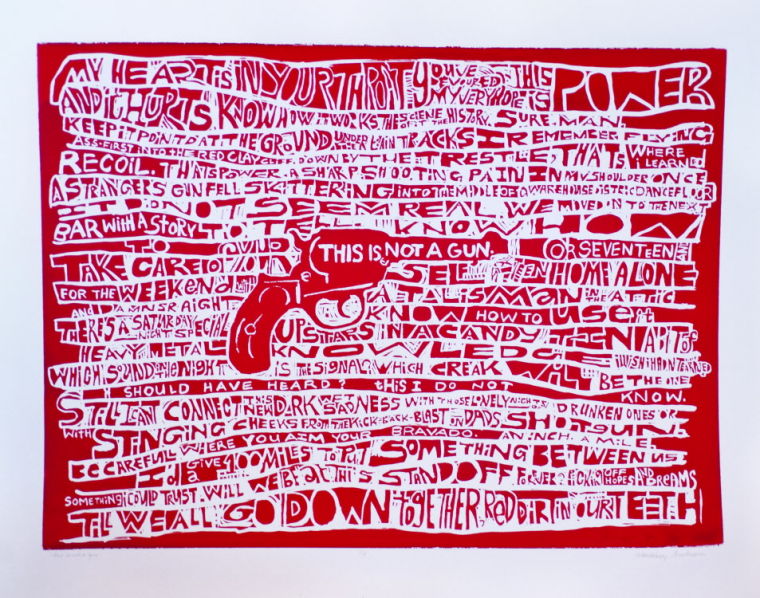
I am participating in a faculty Writing Associates Seminar, in which we are learning to integrate writing more intelligently and productively into our courses. For an upcoming retreat, our seminar leader asked us to write a letter to our future students about what we hope they will get out of our class. I wrote the letter below for a course I am developing — related to my new research project on American gun culture — on “Guns in American Society.” Enjoy!

Photo credit: Lauren Carroll/Winston-Salem Journal

11 July 2014

Dear Students –

I am excited for this opportunity to spend some time together learning about the place of guns in American society. I have very high, perhaps even unrealistic, expectations for what I hope you will take away from this course.

First of all, I hope you will cultivate a scholarly approach to understanding guns. That means you will be able to take an issue that is contentious and complex, and approach it in as objective and nuanced a manner as possible.

This is easier said than done. As sociologists, we are a part of, not apart from, the social worlds we study. This is both a strength and a weakness. It is a strength because we bring a great deal of personal experience and understanding to our studies. It is a weakness because our personal experiences and understandings can be partial, biased, uninformed.

Therefore, we need to inform our personal experiences and understandings with broader sociological theories and more rigorous sociological studies of the phenomenon of interest. In other words, we need to develop our sociological imaginations. As C. Wright Mills put it decades ago, “it is by means of the sociological imagination that [people] now hope to grasp what is going on in the world, and to understand what is happening in themselves as minute points of the intersections of biography and history within society.”

This passage from Mills also points to a second objective of this course. I hope you will come away from the course with a better understanding of yourself with respect to guns. This includes your personal relationship to and personal beliefs about them.

Finally, although we will cover the good, the bad, and the ugly of guns in American society, there is much more to understand than we will be able to cover in the short time we have together this semester. Therefore, I hope to encourage you to develop an attitude and the tools necessary to continue to develop your sociological imagination with respect to guns for the rest of your life.

I am looking forward to getting started on this sociological enterprise with you.

Until then, best wishes,

David Yamane

Oral Arguments in the Supreme Court

On my Gun Culture 2.0 blog recently I wrote about attending a talk by an attorney who had argued recently before the Supreme Court of the United States (SCOTUS).

Richard-Dietz-Abramski-large

One of the most interesting things I have done in my time in Washington, DC is to go see oral arguments in the SCOTUS. Back in 1988, when we were just kids, my friend Boaz Roth and I put on some nice clothes and got in line early to see the court in action. We nonetheless seemed to be on the border of getting in. As we inched our way forward, it was hard to tell where the cut off would be. Then the guard pointed to us and said “the two gentlemen in the suits,” and we were the last two admitted. I’m sure it was the suits.

The basic structure is that each side has 30 minutes to present their case, beginning with the plaintiff. The plaintiff has the option of reserving 5 minutes after the defense for rebuttal.

The real excitement begins as soon as each attorney faces the 9 Supreme Court Justices, and says, “Mr. Chief Justice, and may it please the court. . . ” From that point forward, at any time, any of the justices can interrupt the attorney’s presentation to ask questions. So the attorney has to try to make an argument in the midst of responding to questions — some helpful, some hostile — from 9 judges. (Or, in recent court precedings, 8 because Justice Clarence Thomas rarely asks questions.)

This can be seen in the case I wrote about, Abramski v. United States.The transcript of the oral arguments in this case can be examined here. You can also listen to an audio recording of the arguments that tracks the transcript here.

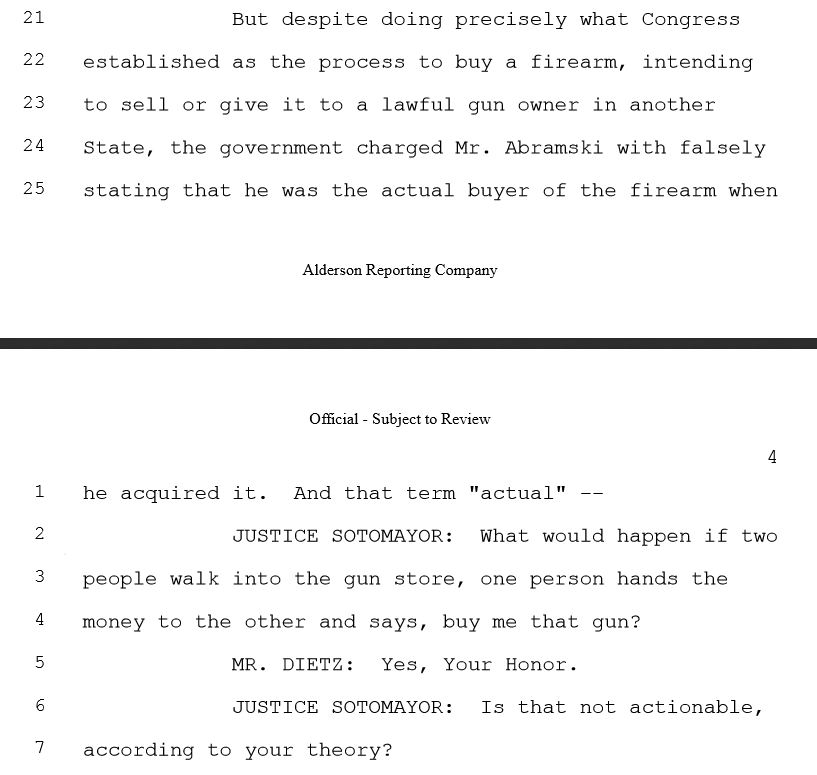
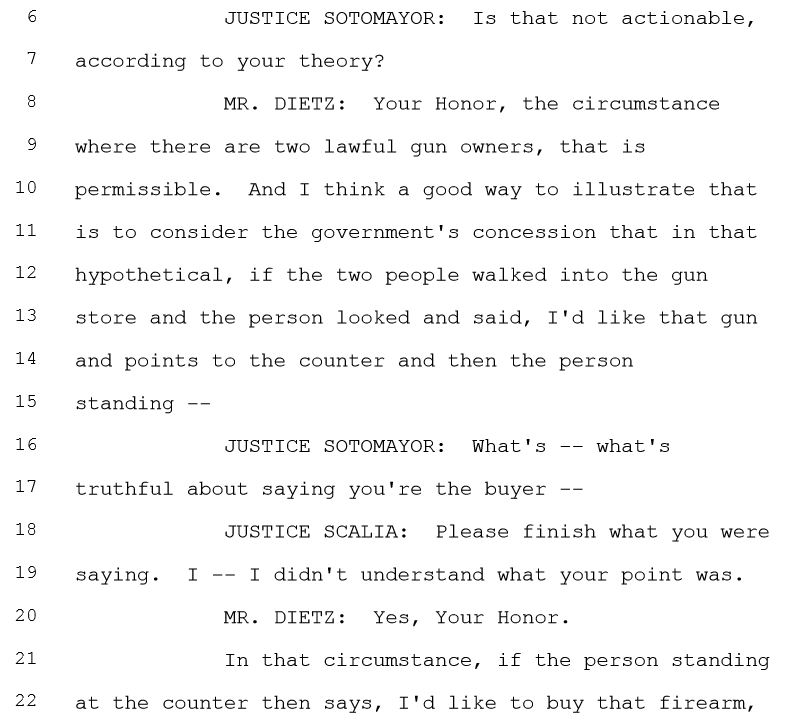
Attorney Richard Dietz, representing Abramski, was beginning his 6th sentence, 50 seconds into his opening, simply reviewing the facts of the case, when Justice Sonia Sotomayor jumped in to ask him a question. Abramski Transcript 1As Dietz was trying to answer the question, Sotomayor pressed her questioning, but then an interesting thing happened. A more sympathetic justice, Antonin Scalia, came to Dietz’s aid. Abramski Transcript 2

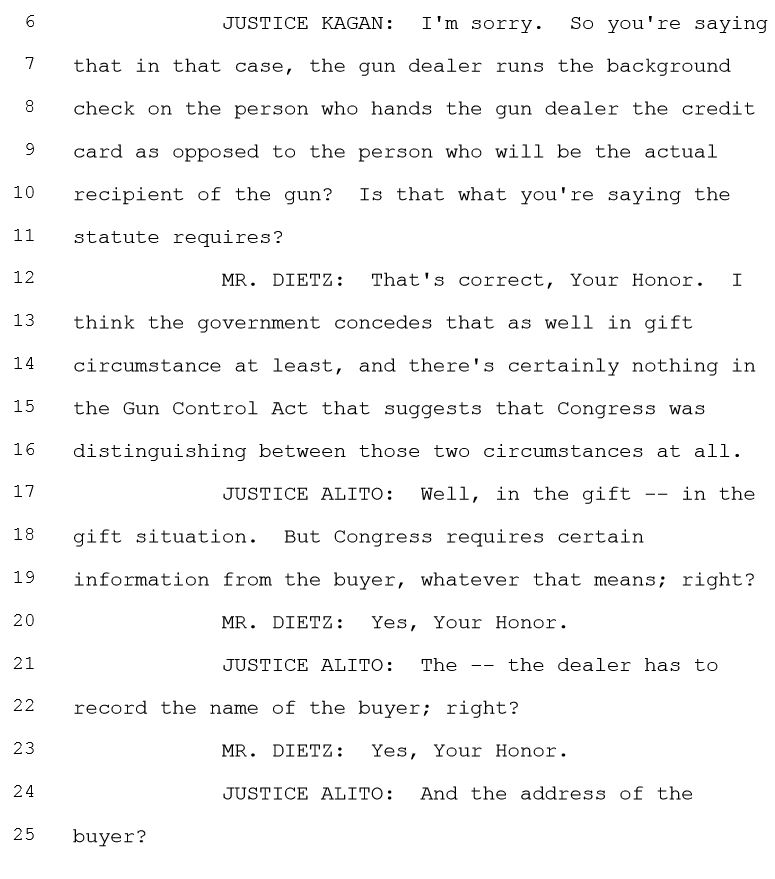
Dietz continued following Scalia’s save, only to draw more fire from Justice Elena Kagan and the immediately after, Justice Samuel Alito. Abramski Transcript 3And so on for 25 minutes. Despite getting 25 minutes to present his case, reserving 5 minutes for rebuttal, Dietz actually shared his time with 8 justices (all but Clarence Thomas). So, he has to continue to try to make his case while at the same time responding to persistent questioning from the justices.

A great challenge and why it is a rare honor and ability to argue cases before the Supreme Court. And why it should be a bucket list item for American citizens.

CONCLUDING ASIDE: In the talk I attended the speaker gave some interesting facts about decisions handed down in the last term (2013). Of approximately 70 cases, almost 40% were unanimous decisions by the 9 justices. Just under 30% were “split” decisions — either 6-3 or 5-4. This suggests that most of the cases decided by SCOTUS are not driven by an ideological “liberal” vs. “conservative” divide.


Official Catholic View of Use of Lethal Force in Self-Defense

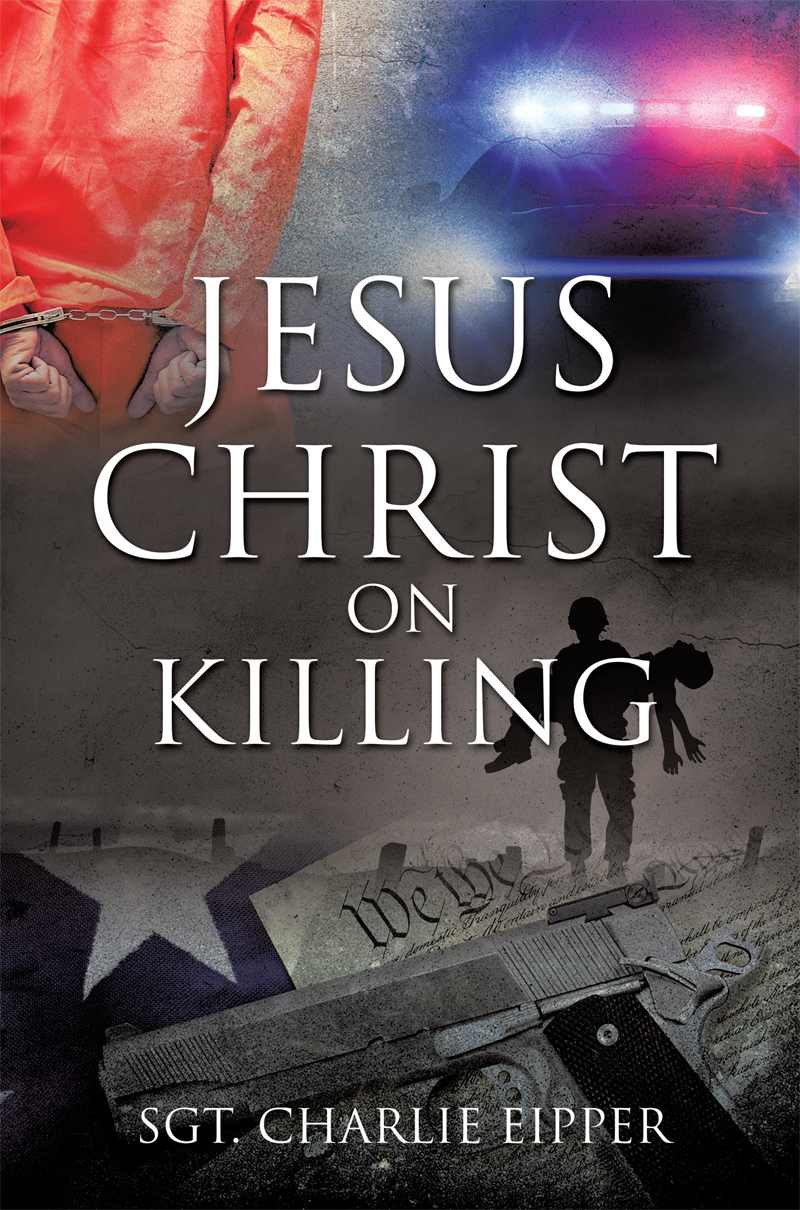
Miguel at the Gun Free Zone blog posted recently about a new book by a Texas police officer called Jesus Christ on Killing.

jesus-christ-on-killing-coverI expect to see evangelical Christians taking this position, but Miguel brings to light some interesting passages from the Catechism of the Catholic Church that I had not previously read:

The seldom discussed subject of the legitimate killing of a human being and how does that mixes with Judeo/Christian values.  As a Catholic (although in a long hiatus) I refer to the Catechism regarding the Fifth Commandment

2263 The legitimate defense of persons and societies is not an exception to the prohibition against the murder of the innocent that constitutes intentional killing. “The act of self-defense can have a double effect: the preservation of one’s own life; and the killing of the aggressor. . . . The one is intended, the other is not.”

2264 Love toward oneself remains a fundamental principle of morality. Therefore it is legitimate to insist on respect for one’s own right to life. Someone who defends his life is not guilty of murder even if he is forced to deal his aggressor a lethal blow:

 If a man in self-defense uses more than necessary violence, it will be unlawful: whereas if he repels force with moderation, his defense will be lawful. . . . Nor is it necessary for salvation that a man omit the act of moderate self-defense to avoid killing the other man, since one is bound to take more care of one’s own life than of another’s.

2265 Legitimate defense can be not only a right but a grave duty for one who is responsible for the lives of others. The defense of the common good requires that an unjust aggressor be rendered unable to cause harm. For this reason, those who legitimately hold authority also have the right to use arms to repel aggressors against the civil community entrusted to their responsibility.

A burden we do not seek but we know we might face.

Catechism of the Catholic Church


Contemporary Application of Bourdieu’s Distinction in Musical Taste

In his famous book Distinction: A Social Critique of the Judgement of Taste, Pierre Bourdieu reports findings from a French survey of cultural tastes fielded in 1967-68. Of particular note is a figure showing the distribution of preferences for three musical works by class fractions. Bourdieu reports that Bach’s “Well-Tempered Clavier” represents “legitimate taste” and is favored by “those fractions of the dominant class that are richest in economic capital.” Gershwin’s “Rhapsody in Blue” stands in for “middle-brow taste” favored by the middle classes. And Strauss’s “Blue Danube” represents “popular taste” — which Bourdieu characterizes as “so-called ‘light’ music or classical music devalued by popularization,” and also “songs totally devoid of artistic ambition or pretension” such as works by Petula Clark. This taste “is most frequent among the working classes and varies in inverse ratio to educational capital” (p. 17).

I do a mini-version of Bourdieu’s survey in my sociological theory class, playing these three songs for my students and asking them to indicate which they like. There are often very seemingly idiosyncratic patterns in the responses to these songs. Strauss is generally pretty popular overall, though, which is exactly the opposite of what Bourdieu would expect from my generally well-educated and fairly affluent student. Discussion of this often highlights the fact that the music in Bourdieu’s study is too old to allow for meaningful interpretation of the relationship between American social class, educational capital, and taste. So, I field another survey for my students.

I am assisted in my choice of songs by a student who sent me a link to the following chart, from an on-line story called “Does Your Taste in Music Reflect Your Intelligence?”

MusicthatmakesyoudumbLargeThe results bring together the most popular songs at 1,352 American colleges and universities and the average SAT scores at those same institutions. Of course, this is not a sociological study, though the person who did the work, Virgil Griffith, is a PhD student at Caltech studying the “information-integration theory of consciousness” (not exactly a rocket scientist, but close to alot of rocket scientists at Caltech).

Bourdieu talks about “educational capital” rather than intelligence, but we do know that one of the things that the SAT measures is the economic and cultural capital of the students taking the exam, so the SAT is not a terrible proxy for what Bourdieu is talking about.

In my reduced version of Bourdieu’s study, I chose three songs that appear high, middle, and low in the SAT spectrum: Radiohead’s “Karma Police” (high), OutKast’s “Ms. Jackson” (middle), and Beyonce’s “Crazy in Love” (low). I asked students to indicate which of the three songs was their favorite. The results were as follows:

HIGH (Radiohead): 21%
MEDIUM (OutKast): 38%
LOW (Beyonce): 41%

I welcome any comments on the results of this exercise!


Three Blog Posts on Initiation in the Contemporary Catholic Church

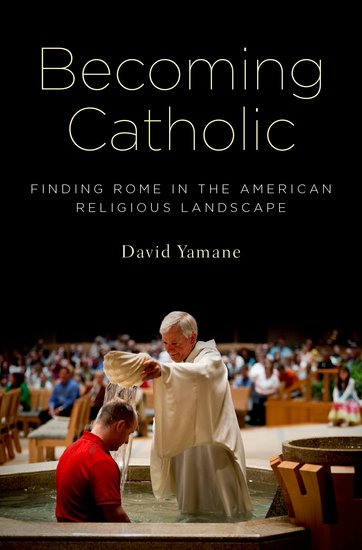
Oxford University Press was good enough to allow me to write three blog posts this Easter weekend with my thoughts on initiation in the contemporary Catholic Church. Here are links to the three posts:

  1. Initiation into America’s Original Megachurch (18 April 2014)
  2. Reinventing Rites of Passage in Contemporary America (19 April 2014)
  3. Easter Rites of Initiation Bring Good News for American Catholics (20 April 2014)

The posts build on my recently published study of the Rite of Christian Initiation of Adults, and hopefully build some interest in it.

You can order it from Barnes & Noble at a 20% discount, and also get it as a Nook book or for the Amazon Kindle (Amazon.com was recently sold out of the book, but hopefully it will come back in stock there, too.)

Becoming Catholic Cover

Photo of adult being baptized

– See more at: http://blog.oup.com/2014/04/easter-reflections-initiation-america-megachurch/#sthash.Le5Dj9ey.dpuf

Teaching the Frankfurt School on the Culture Industry and Standardization of Cultural Products

In my sociological theory class recently, I was teaching about critical theory (i.e., “the Frankfurt School”). Specifically, students were reading excerpts from Theodor Adorno’s and Max Horkheimer’s work on “The Culture Industry,” excerpted from their 1944 book The Dialectic of Enlightenment.

Dialectic of EnlightenmentWe talked about how the production of mass cultural commodities (books, films, TV, music) is the same as all mass production. It is geared toward making a profit by minimizing the costs of production and maximizing consumption (i.e., “audience”). The result is homogeneity and predictability.

As Adorno and Horkheimer observed back in the 1940s, “As soon as the film begins, it is quite clear how it will end, and who will be rewarded punished or forgotten. In light music [popular music], once the trained ear heard the first note of the hit song, it can guess what is coming and feel flattered when it does come…The result is a constant reproduction of the same.”

In his essay “On Popular Music,” Adorno refers to the rules of standardization in popular music, the best know of which is that “the chorus consists of thirty two bars and that the range is limited to one octave and one note.” Mind-numbing.

To make this point, I usually just refer to Katy Perry and Jessie J. and whoever the latest pop star is, but this year one of my students pointed me to a song by the group, “Axis of Awesome” which makes this point much better than I could with my limited understanding of music. Check out the video for their song “4 Chords” below:

Enter to Win a Free Copy of My Book “Becoming Catholic” from Goodreads

.goodreadsGiveawayWidget { color: #555; font-family: georgia, serif; font-weight: normal; text-align: left; font-size: 14px;
font-style: normal; background: white; }
.goodreadsGiveawayWidget img { padding: 0 !important; margin: 0 !important; }
.goodreadsGiveawayWidget a { padding: 0 !important; margin: 0; color: #660; text-decoration: none; }
.goodreadsGiveawayWidget a:visted { color: #660; text-decoration: none; }
.goodreadsGiveawayWidget a:hover { color: #660; text-decoration: underline !important; }
.goodreadsGiveawayWidget p { margin: 0 0 .5em !important; padding: 0; }
.goodreadsGiveawayWidgetEnterLink { display: block; width: 150px; margin: 10px auto 0 !important; padding: 0px 5px !important;
text-align: center; line-height: 1.8em; color: #222; font-size: 14px; font-weight: bold;
border: 1px solid #6A6454; border-radius: 5px; font-family:arial,verdana,helvetica,sans-serif;
background-image:url(https://www.goodreads.com/images/layout/gr_button4.gif); background-repeat: repeat-x; background-color:#BBB596;
outline: 0; white-space: nowrap;
}
.goodreadsGiveawayWidgetEnterLink:hover { background-image:url(https://www.goodreads.com/images/layout/gr_button4_hover.gif);
color: black; text-decoration: none; cursor: pointer;
}

Goodreads Book Giveaway

Becoming Catholic by David Yamane

Becoming Catholic

by David Yamane

Giveaway ends April 30, 2014.

See the giveaway details
at Goodreads.

Enter to win

https://www.goodreads.com/giveaway/widget/89025