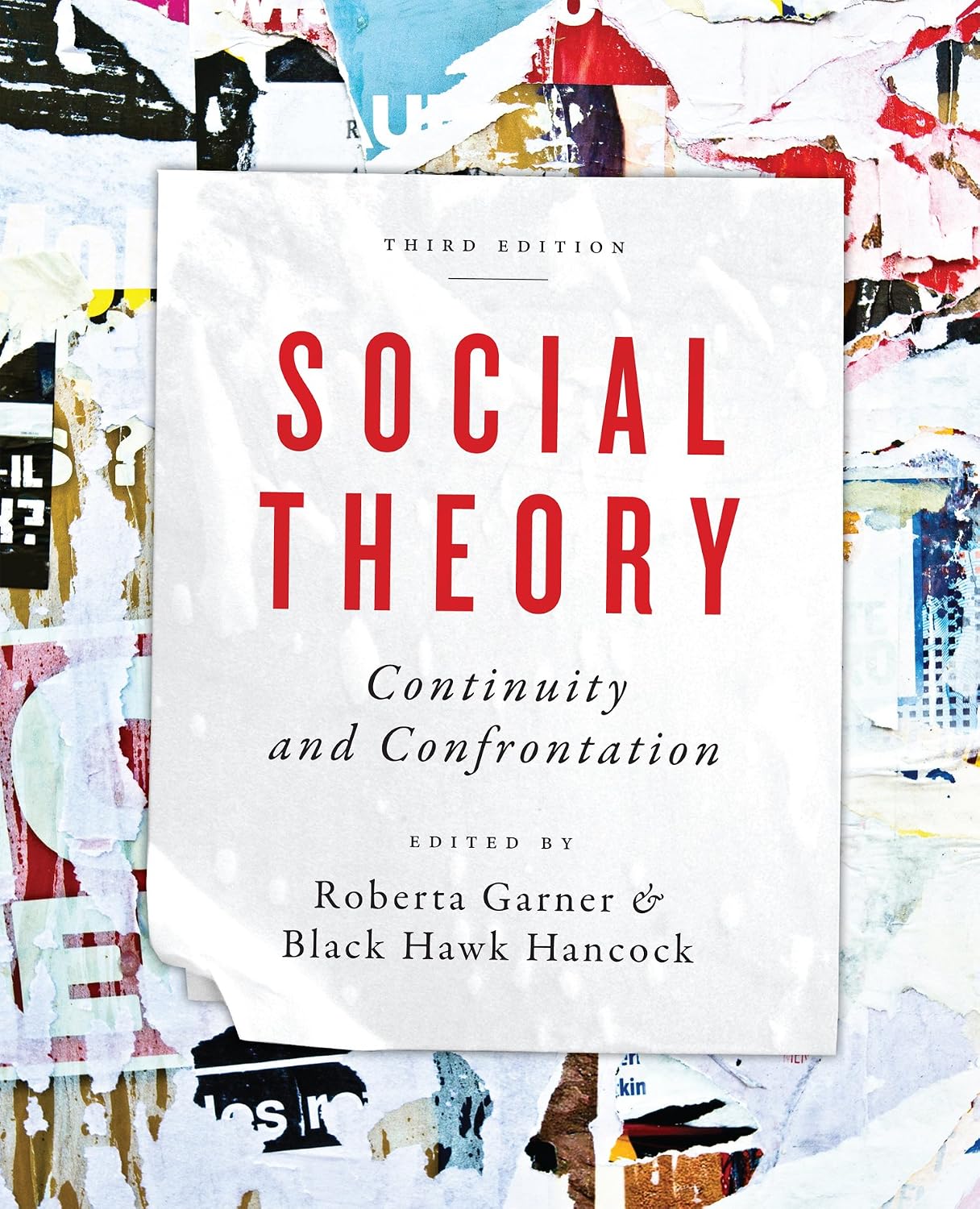
Teaching the Frankfurt School on the Culture Industry and Standardization of Cultural Products

In my sociological theory class recently, I was teaching about critical theory (i.e., “the Frankfurt School”). Specifically, students were reading excerpts from Theodor Adorno’s and Max Horkheimer’s work on “The Culture Industry,” excerpted from their 1944 book The Dialectic of Enlightenment.

Dialectic of EnlightenmentWe talked about how the production of mass cultural commodities (books, films, TV, music) is the same as all mass production. It is geared toward making a profit by minimizing the costs of production and maximizing consumption (i.e., “audience”). The result is homogeneity and predictability.

As Adorno and Horkheimer observed back in the 1940s, “As soon as the film begins, it is quite clear how it will end, and who will be rewarded punished or forgotten. In light music [popular music], once the trained ear heard the first note of the hit song, it can guess what is coming and feel flattered when it does come…The result is a constant reproduction of the same.”

In his essay “On Popular Music,” Adorno refers to the rules of standardization in popular music, the best know of which is that “the chorus consists of thirty two bars and that the range is limited to one octave and one note.” Mind-numbing.

To make this point, I usually just refer to Katy Perry and Jessie J. and whoever the latest pop star is, but this year one of my students pointed me to a song by the group, “Axis of Awesome” which makes this point much better than I could with my limited understanding of music. Check out the video for their song “4 Chords” below:

Enter to Win a Free Copy of My Book “Becoming Catholic” from Goodreads

.goodreadsGiveawayWidget { color: #555; font-family: georgia, serif; font-weight: normal; text-align: left; font-size: 14px;
font-style: normal; background: white; }
.goodreadsGiveawayWidget img { padding: 0 !important; margin: 0 !important; }
.goodreadsGiveawayWidget a { padding: 0 !important; margin: 0; color: #660; text-decoration: none; }
.goodreadsGiveawayWidget a:visted { color: #660; text-decoration: none; }
.goodreadsGiveawayWidget a:hover { color: #660; text-decoration: underline !important; }
.goodreadsGiveawayWidget p { margin: 0 0 .5em !important; padding: 0; }
.goodreadsGiveawayWidgetEnterLink { display: block; width: 150px; margin: 10px auto 0 !important; padding: 0px 5px !important;
text-align: center; line-height: 1.8em; color: #222; font-size: 14px; font-weight: bold;
border: 1px solid #6A6454; border-radius: 5px; font-family:arial,verdana,helvetica,sans-serif;
background-image:url(https://www.goodreads.com/images/layout/gr_button4.gif); background-repeat: repeat-x; background-color:#BBB596;
outline: 0; white-space: nowrap;
}
.goodreadsGiveawayWidgetEnterLink:hover { background-image:url(https://www.goodreads.com/images/layout/gr_button4_hover.gif);
color: black; text-decoration: none; cursor: pointer;
}

Goodreads Book Giveaway

Becoming Catholic by David Yamane

Becoming Catholic

by David Yamane

Giveaway ends April 30, 2014.

See the giveaway details
at Goodreads.

Enter to win

https://www.goodreads.com/giveaway/widget/89025

Black Hawk Hancock on Stuart Hall (1932-2014)


My friend Black Hawk Hancock has written a nice obituary for the “Godfather of Cultural Studies,” Stuart Hall, who died yesterday. It is posted on the University of Toronto Press’s blog.

The post also calls attention to Hancock’s forthcoming classical and contemporary theory reader, which gives Hall a pride of place. A link to the introduction to the Hall section of the textbook is also available on the blog or here.

Reflections on Walter Benjamin’s “Unpacking My Library” on the Occasion of Unpacking My Library

I spent my winter break this year packing up my office and moving to a new building. The biggest part of moving offices for me is always packing and unpacking my hundreds of books acquired over the past 25 or so years.

232 Carswell Hall
16 boxes of books in 232 Carswell Hall

Each time I move offices, I read Walter Benjamin’s essay “Unpacking My Library: A Talk about Book Collecting.” The essay was first published in 1931 in Literarische Welt. I read it in a collection of Benjamin’s essays and reflections called Illuminations that I purchased primarily to read his more famous essay, “The Work of Art in the Age of Mechanical Reproduction.”

As the subtitle suggests, the essay is not really about his library per se, but about book collecting and, in essence, about a people’s relationships to their books. He insists that it is a “relationship to objects which does not emphasize their functional, utilitarian value—that is, their usefulness.” Instead, he uses words like “love” and “enchantment” to describe the relationship. When unpacking his library, Benjamin says he is filled with images and memories he associates with the books. Cities he visited, rooms he occupied. In this way, to paraphrase Benjamin, our books do not live in us; we live in our books.

Unpacked library in Kirby Hall

Every book I have, I have for a reason. They embody the places I have been, people I have known, classes I have taken, research projects I have undertaken (or have wanted to undertake or may yet undertake). So unpacking my library allows me – indeed, forces me – to re-live my past, evaluate my present, and consider my future.

Perhaps because I have parted with those books that have negative associations for me – e.g., those on Catholic higher education – I have overwhelmingly positive feelings while unpacking my library. I have a shelf reserved for my teachers over the years: Bellah, Blauner, Bonnell, Burawoy, Camic, Epstein, Gorski, Joas, Kornhauser, Lembo, Lichterman, Voss, and others. I have a shelf reserved for friends and colleagues: Baggett, Bartkowski, Byrne, Flake, Hancock, Marti, Wood, and others. And interspersed throughout the rest of the shelves are the books, too many to name, that made me and sustained me as a scholar. Every book on every shelf is there for a reason.

That said, for the first time ever, packing and unpacking my library has been a bittersweet experience. Each of my previous 4 major moves involved getting a bigger office and more space for my books. So I accumulated and accumulated, easily owning over 3,000 books at one point. In my new office, I was only given 3 bookshelves and so I have had to pare back to just 1,000ish books between work and home.

Donating box after box of books was like tearing out and throwing away pages from a photo album or diary. I only hope that someone will see in these orphaned books what I saw in them when I had world enough and time to collect without limit.

What I’m Reading: Gabrielle Hamilton’s “Blood, Bones, and Butter”

I decided to “read” (i.e., listen to) Gabrielle Hamilton’s Blood, Bones, and Butter: The Inadvertent Education of a Reluctant Chef solely based on the blurb written by Anthony Bourdain: “Magnificent. Simply the best memoir by a chef ever. Ever.” As the author of what many consider the best memoir ever — Kitchen Confidential — I took Bourdain’s endorsement seriously. Having now listened to the book, I have to disagree with his overall assessment — even if it was an enjoyable read.

Like many people who work in the food service industry — in my experience, at least — Hamilton came from a damaged background after her parent’s break-up. Who moves to Hell’s Kitchen at age 16 and waits tables? Much of her story is trying to come to terms with who she is and where she came from — though food.

It’s mostly a compelling and interesting story, especially the intricate details of getting her now famous restaurant Prune up and running. I was really rooting for her through this part. But there is also a couple of places where she is notably not forthcoming and here I begin to question her credibility as a memoirist. She was estranged from her mother, and we don’t really find out why. She had a relationship with a woman while doing a creative writing program in Michigan, then has two sons with a man seemingly out of convenience. Much of these stories are elided.

I’m not saying she needs to take us into her bedroom to be honest in her memoir, but she tells parts of these stories when it is convenient to her and so not having the whole story is frustrating.

Overall, a fun and interesting read, the frustration notwithstanding.


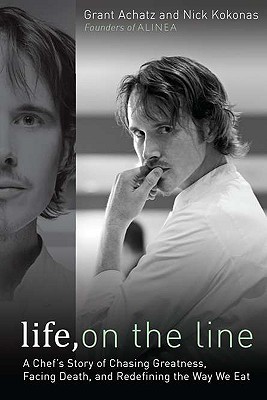
What I’m Reading: Grant Achatz’s “Life, On the Line”

I had heard of but did not know anything specific about Grant Achatz and his Chicago restaurant Alinea prior “reading” (i.e., listening to) Life, On the Line: A Chef’s Story of Chasing Greatness, Facing Death, and Redefining the Way We Eat.

The book is cleverly and accurately titled, as it tells the story of Achatz’s career as a chef working “on the line” in various kitchens (including for such luminaries as Charlie Trotter and Thomas Keller) and it also tells the story of Achatz’s diagnosis of and battle with the cancer that put his life “on the line.” Cruelly ironic was that he develped stage IV squamous cell carcinoma-tongue cancer at the same time that he was being recognized as one of the best chefs in America.

I didn’t realize until I reached his chapter that the book was co-authored with Achatz’s friend and business partner Nick Kokonas. At first I thought, why do I care what the financier has to say? I want to know about the chef and his cooking. But then I realized having Kokonas as a co-author and alternating chapters between Achatz and Kokonas was very clever because it allowed Kokonas to say all of the very flattering things about Achatz that it would have been uncouth for Achatz to say about himself. And given his ability as a chef, those flattering things are a very important part of the story.

Men: Choose Your Car Wisely

From the Chronicle of Higher Education’s “No Kidding” Column (5/22/09):

IS THAT A BENTLEY IN YOUR POCKET? Men who drive luxury cars are found to be more attractive than those who drive subcompacts, says a study published online in March in the British Journal of Psychology. Study participants were shown pictures of a model of the opposite sex in two different cars: a silver Bentley Continental and a red Ford Fiesta. While men found the model equally attractive in both settings, women rated the model as “significantly more attractive” when sitting in the Bentley. Noted the study: “It would appear that despite a noticeable increase in female ownership of prestige/luxury cars over recent years, males, unlike females, remain oblivious to such cues.”

By the way, I drive a Hyundai. No kidding.

Why are my students so DOUR?

Dour. If I had to use one word to describe my students, that would be it. Maybe I’ve already blogged about this. I can’t remember. But it bears repeating.

On more than one occasion, I have looked out at a room full of students and yelled, “Why are you so DOUR? You have EVERYTHING!”

I met women selling bags of water on the streets of Accra, Ghana who were happier than these students. Students who watch TV on plasma screens in their dorm rooms, then drive their BMWs to eat sushi for dinner, before getting a couple of hours of studying in between IMing, BBMing, texting, and Facebooking their friends. OK, so that’s an exaggeration. Sort of.

I thought of these dour students recently when I was listening to an old interview with David Foster Wallace on “Fresh Air,” the NPR show. Wallace has recently committed suicide at age 46. I haven’t read his fiction, most notably his novel “Infinite Jest,” but his essay on “Roger Federer as a Religious Experience” in the New York Times magazine a couple of years ago was amazing.

In any event, in the interview with Terry Gross, he talks about the inspiration for his novel “Infinite Jest” being his realization at age 30 that despite having been grotesquely privileged their whole lives he and his friends were also extraordinarily sad. He attributes this in part to the fact that “success” in our culture means: make alot of money, have an attractive spouse, and become (in)famous in some way — i.e., experience as much pleasure as possible, which ultimately is empty.

Viewed through this lens, binge drinking and random hooking up (for example) is a symptom, then, not a cause of a generation of college students who are privileged, sad, hollow, and dour.

Correct me if I’m wrong.

Sarah Palin’s Kids’ Ridiculous Names

I really am closed-minded when it comes to kids names. I like names that connect kids to historic traditions, rather than ones that signify the child’s uniqueness in the world. So, obviously, Sarah Palin’s kids’ ridiculous names are another reason I won’t be voting for McCain-Palin in November.

Track, Trig, Bristol, Willow, and Piper.

Using the Sarah Palin Baby Name Generator, I determined that my own name would be: “Claw Washout Palin.” Sweet.

Try it out.